
Monday, June 29, 2026
The Vampire Lestat, Episode 4: The Devil’s Road
This show seems to be alternating between brilliant episodes and less inspired ones. Episode Four, The Devil’s Road is in the latter category. It is an episode that despite the fact that there is a ton of book material yet to be touched, spends much of its time meandering like the chapter of The Vampire Lestat for which it is named. Incidentally, a chapter that frustrated and stymied author Anne Rice to no end.
My big problem with this episode (aside from some arguably questionable Gabriella characterization) is tonal. I know Lestat is firmly in his brat era but it is just…too much. He’s overshot brat and is firmly in obnoxious territory for parts of this episode. His behavior is way over the top. When the episode has me empathizing with Armand over Lestat, we have problems because I loathe Armand.
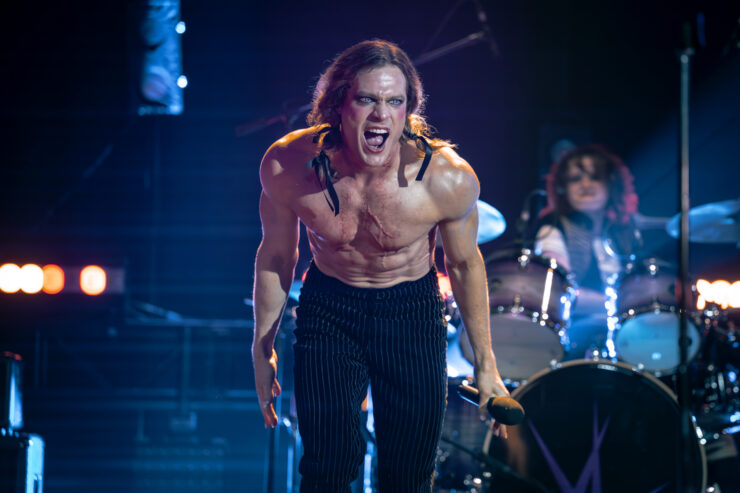
This is also frustrating because Lestat seemed to have developed some real self-awareness in the last episode, in which he appears to say goodbye at least to some of the ghosts of his past, and seemingly Gabriella. In any case he is riding a bit high at the start of the episode having gone viral for video of his concert levitation.

Meanwhile Louis, dubbed by Lestat as “he who licenses and franchises the night,” a spin of the Louisiana vampire’s “I own the night” line at the end of season two,” has been hanging around the diner where Claudia’s doppelgänger, Regina, works. This is borderline creepy stalker behavior and we learn more about her throughout the episode, specifically her checkered past back in Europe and the UK. This character is extremely sus. It is pretty crazy that there is another character who exactly resembles Claudia. Most likely she is a Talamasca operative. Her name translates to Queen in Latin, so perhaps she is some kind of harbinger of Akasha. She is observed interacting with other customers so it seems like she is real enough. This is uncharted territory as Claudia does not appear this way in the books although she does return as a ghost a couple of times. The two settle on an arrangement where the young woman agrees to do some Claudia LARPing for Louis. His storyline this episode has less to do with being a vampire than a really messed-up billionaire.
Daniel continues to try to break Lestat for the documentary, despite the humiliating experience last week. Lestat describes the telepathically-shared story as a gift but Dan is not buying it. I do think Lestat is sincere here. Ironically, Daniel,seems to hold a point of view common to many younger people that if an experience didn’t happen on camera it holds little value.
However, Daniel does seem to have worked out that Sofia is actually Gabriella, Lestat’s mother despite the fact that Lestat spins a sad yarn about her demise in their interviews. Throughout the episode we see some flashbacks that detail the “real” story of their post-Paris travels together on “the Devil’s Road.” These flashbacks cover about a decade of the pair traveling across Europe and we see their new vampire relationship develop. These scenes are scored with lush romantic music and often feature a recurring sound effect of the crashing waves which Lestat associates with her abandonment.
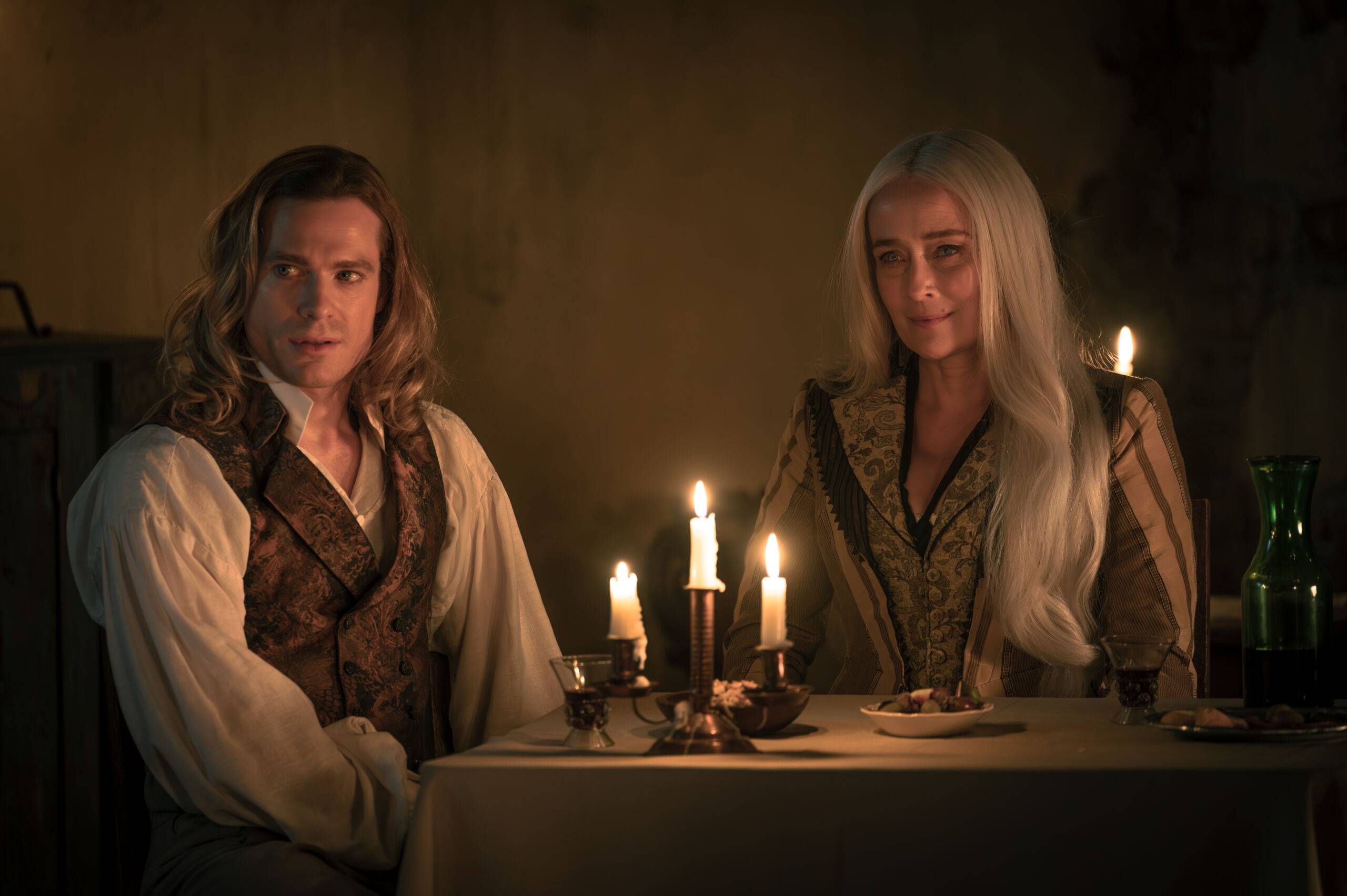
There is a lot of the Gabriella characterization that the show is getting right, particularly the liberation she experiences at her new-found state after first living as a girl “wrapped in black silk” and cloistered away and then shipped off to rural France to be subsumed into marriage and motherhood. In the book, her lust for freedom also manifests in her gender expression and she eschews binding female clothing and long hair in favor of a more male or androgynous appearance. Sadly the show has kept her pretty glam. As in the book, she takes to vampirism even more than Lestat, with little or no compunction about killing.
The show does play up this element of her character as well as making her generally more sinister and manipulative. In this episode she is seemingly aligned with the Great Conversion, the explosion of the vampire population around the world. Indeed, she seems to want Lestat to lead or be involved with it and she sees the tour as a way to rally the vampires together. Book Gabrielle-while in her younger days expressed some of the same sentiments-is largely uninterested in the world of human beings or even vampires for that matter. It will be interesting to see how this plays out with Akasha’s appearance. In the books, Akasha (and, Amel, the spirit that animates her) are offended by the unchecked spread of vampirism as it dilutes their power.
If Lestat is on a rock music tour, Armand is making an apology tour. Apparently his introduction in an AA meeting last week was to be taken literally and our favorite murder gremlin is going around making amends to the people he has harmed. The fact that a five hundred year old vampire would take part in a mortal recovery program is a little goofy but so is blood piss and blood showers. So here we are.
![The Vampire Lestat 🎼 Episode 4 | The Devil's Road [Megathread] : r/VampireLestat](https://preview.redd.it/the-vampire-lestat-episode-4-the-devils-road-megathread-v0-084wq037ox9h1.jpeg?width=682&format=pjpg&auto=webp&s=539cf98a9402aca85bec2978ab41dfcbe3c05d77)
He starts with Daniel Malloy the fledgeling that he created out of spite apparently, and then abandoned. Daniel, of course is having none of it and we get the first of a series of brutal Armand reads this episode. Maitre then makes his way to Lestat for his apology. Lestat takes this in the way you would expect and confesses that his silence about his role in saving Louis from the vampire trial was specifically to torture Armand and eat away at their relationship over the decades. When you have eternity to be petty, you can really play the long game.
Lestat invites Armand to his concert where he literally shines a spotlight on him and sings a diss track that he wrote which begs the question: is it possible to overserve cunt? Because I feel at this point we are getting diminishing returns, especially if the result is making Armand into a sympathetic character. The treatment was so humiliating that even Daniel followed his maker out to the street to check on him. From this scene Armand claims to love or have loved Daniel. When? Where? How? Also, the phenomenon that Daniel has been feeling of the whole world disappearing save for Armand does not seem to actually have been caused by Armand. Is this perhaps related to the Akasha’s awakening and other apocalyptic events that seem to constantly happening around the fringes of this tour?
After the concert the fan for who Lestat “signed” a copy of IWTV in the “Detroit” episode shoots Lestat and his lawyer, Christine. He also releases an anti-vampire manifesto online. This storyline is reminding me alarmingly of the “witchhunter” subplot of Mayfair Witches. While Lestat was prepared to return home, Gabriella returns and convinces him to conclude the tour.
NOTES:
- Lestat claims the Talamasca are behind the bots responsible for the viral concert clip. WTF are they even doing? This is another reminder of how the Immortal Universe has completely bungled this organization which is one of Rice’s best creations. This is the one thing that Queen of the Damned movie actually got right compared to this show.
- Lestat refers to Daniel as “The Vampire Bourdain.”
- Lestat asks Daniel “Are you missing the psychodrama from Dubai?” This could also be a troll aimed at the audience, some of whom are missing the pacing, drama, and maturity of the first two seasons.
- Alex before he describes his AA experience with Armand: “This is going to sound like a can or corn.” “I like corn.” A not so subtle shoutout to Johnathan Davis the lead singer of the band Korn who fulfilled a similar role with the music on the 2003 Queen of the Damned movie that Daniel Hart does on The Vampire Lestat.
- Armand has apparently been sponsoring Alex and helping him. Mind you, not helping him do the work of recovery but by messing around in his mind and taking away his pain, which is Classic Armand.
- Lestat to Armand: “You used my lover to lure me and my mother to you underground death orgy.” So she was there despite Armand omitting her from his retelling last season.
- This episode is the source of the semi-cringey “I’m quite sexy” line from the trailers.
- This one doesn’t feature any great music, at least not that is showcased. We get a couple of snippets and Plastic Fiends is blasted over a scene. The only showcased song, “Big Boss” is obnoxious and terrible.
- Marius is next week! And he looks…very Roman.
- For all Lestat’s Akasha name-dropping, strange we haven’t heard anything about her in his music. In the book, there is a specific Those Who Must Be Kept song and music video. Maybe next week?
- Lestat refers to his portrayal in IWTV as “Toxic bitch anxiously-attached show pony with a personality disorder.” I mean if the Lelio costume fits...
I’d like to close with a curated selection of Armand insults from “The Devil’s Road.”
- A “Friendless Bottom Twink Sociopath.”
- A “Five-hundred year-old pussy.”
- That his recovery is sponsored by “Pseudologis Pensioner Fuckboys for Sobriety.” I had to look that one up. Pseudologis basically means compulsive liar.
- That he has no soul.
- That he has “uso, Japanime eyes.”
- And that he is a “fuck cloud.”
Sunday, June 21, 2026
The Vampire Lestat, Episode 3: Toronto
We continue as the Vampire Lestat’s "self-financed vanity romp" pulls into Toronto with his band, crew, Gabriella and Daniel Molloy in tow. Daniel seems ready for a last ditch effort to make good on his awards fodder documentary and this episode revolves around a contest of wills between Molloy and Lestat. As Lestat admits, he spends a lot of time “serving cunt” which has made him a difficult interview subject. And Daniel is desperate to break through with him. He eventually does, but not in a way that helps his project. Instead we rely on the narrative device of the Failures recordings for most of what happens here. Louis also has a B-story here, hunting down the Fang Gang and Claudia’s captor, the vampire known as Killer.
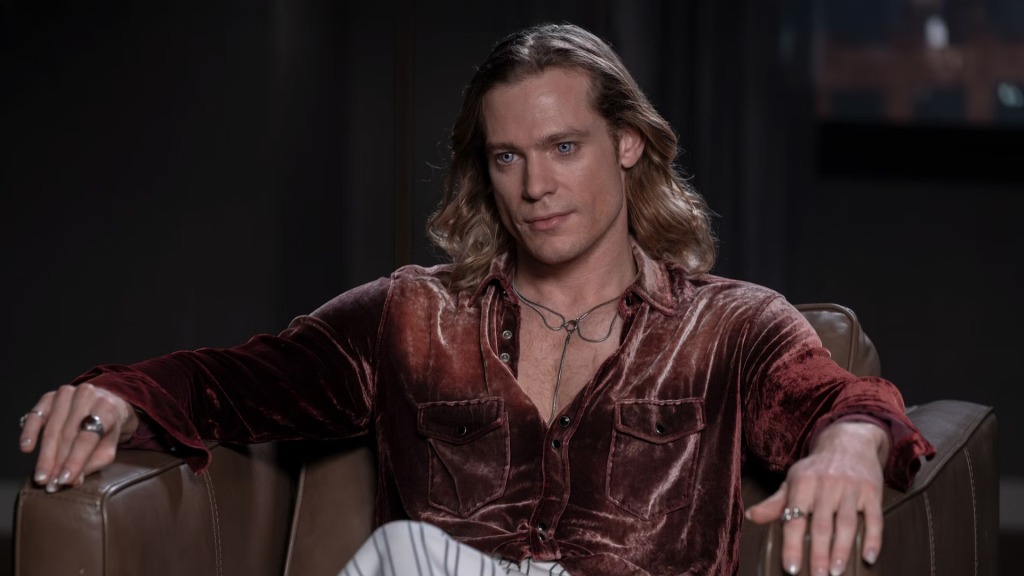
The past events in focus here are Lestat’s arrival in Paris, his relationship with Nicky, his “first love,” and his turning at the hands of the Vampire Magnus. This Paris story moves at a lightning pace and is told in a pretty fractured way. For book readers, there is a lot of the Paris story still to be told. Hopefully, we will get it in future episodes. I am confident that since Armand is coming into focus, we see more of him and the 18th century Paris coven.
![The Toronto Skyline is Something to Behold: 'The Vampire Lestat' Finds Its Emotional Center in Sam Reid and Jacob Anderson's Performances [Review] - iHorror](https://ihorror.com/wp-content/uploads/2026/06/3033-1024x683.jpg)
Lestat runs into Nicky shortly after his arrival in Paris and as in the book, the two had a long-standing relationship from Auvergne, although in the show Nicky came to Paris first as opposed to the two leaving together. We didn’t get as much of this relationship as I would have liked. The Interview with the Vampire incarnation of this show was incredible with the high stakes and in-depth way it handled its relationships, think about the often devastating emotional conflicts between Louis and Lestat and Louis and Armand. We finally get a little of that here with Lestat and Nicholas but it’s really only one scene and although it’s quite good, I wish we got more of it but that may just be the structure of the show and Lestat's difference from the more introspective and forthcoming Louis. It's taken Lestat three episodes to get to the point where he can reconcile with his pain.
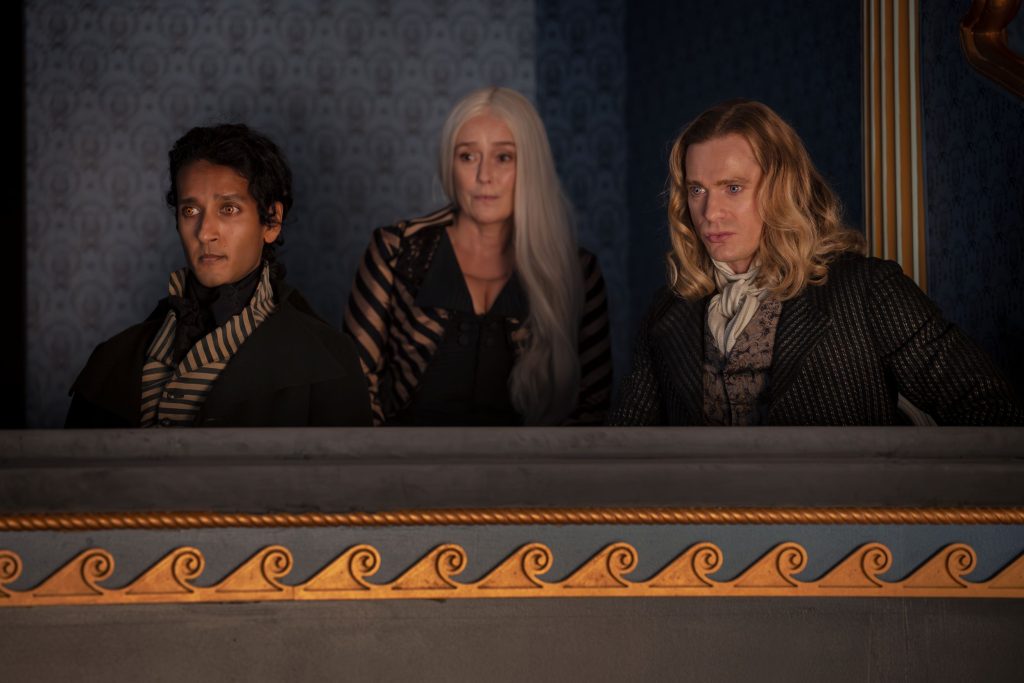
Interestingly, we’ve seen some of these scenes or analogues to them in season two but from Armand’s point-of-view and the differences here are amusingly different. For example we had a version of the Renaud’s balcony scene which Armand characterized as a very romantic private moment between him and Lestat. In Lestat’s version of the scene Gabriella is present and Lestat’s response to Armand’s very tender “I love you,” is a hilariously fed-up “Christ!” Certainly, Lestat is only a slightly more reliable narrator than Armand, so grain of salt. Show Lestat hates Armand more overtly that Book Lestat so it’s no surprise he would not give him any grace in the recounting of their relationship. The very specific, character-based humor continues to shine on this show.
Gabriella’s appearance here also calls into question her absence in Armand’s season two retelling of the Paris events. She is present in the corresponding scenes in the book and according to Lestat’s telling here she was around for all of this. I speculated at the time that this might be shade by omission on Armand’s part. In the books he has a particular disdain for Gabrielle and we get a small taste of it here, where he ignores her and bristles at her pushy questions.
The other major life event depicted here is Lestat’s turning by Magnus and the telling of which hangs on the song, “Your Biggest Fan,” which is to-date the best Lestat song released and the one most closely drawn from Rice’s source material. This single was released before the season started and at first glance it is a sweet acoustic ballad but as it goes on it begins take some dark and disturbing turns. It became obvious after a couple of listens that this song was from the point-of-view of Magnus, the vampire who stalked and abducted mortal Lestat.
Here the story is first presented in a glib music video style telling (complete with Magnus lip synching!) and then flashes of the “real” account that Lestat relays to Daniel in all its brutal and violent detail. Finally, Daniel manages to make a breakthrough with Lestat after multiple attempts that had resulting in little more than games and trolling. Unfortunately for Daniel, their interaction—although meaningful and personal—was purely telepathic and not captured on camera. I think Daniel’s attempt to recreate his interview success with Louis will not be recreated with Lestat.

This is a unique take on Magnus who Rice described as a ghoulish, almost Nosferatu kind of figure. While his actions are in line with the book—he noticed Lestat through his performances and beauty—the show frames him as a kind of creepy stalker of younger more beautiful men. With his too-black hair and somewhat made-up appearance, he is very much coded as an older predatory gay man. Like he might have property in Palm Springs.
Having to process the very transformational trauma which he accuses Daniel of having seems to have resulted in Lestat turning a corner by the end of the episode. He seems to say goodbye to his Parisian muses—Nicky, Gabriella, Magnus. Shockingly, he ends the episode in a relatively healthy place.
Louis, however, spends the episode murdering his way through the Fang Gang coven house looking for Bruce/Killer who arrives with his new wife—episode one’s Baby Jenks. A lot of people were speculating at the time that Baby Jenks was part of a trap to weaken Lestat with drugs before the Fang Gang ambush and they were right. In the Queen of the Damned she is affiliated with the more benign book version of the gang.
When Louis confronts Killer he pulls out the missing pages of Claudia’s diaries which he had pulled prior to his interview with Daniel in the first season of IWTV. This recounting of Claudia’s capture and assault is juxtaposed with Lestat’s “true” account of kidnapping and assault by Magnus. It is a really powerful sequence that is payoff for Lestat’s previous references to his lack of consent in becoming a vampire. Even 1994’s Cruisestat reference this fact and it is central to Lestat’s character.
Louis ends the episode at the dinner with the waitress who is Claudia’s doppleganger (a returning Delainey Hayles). This is not from the books at all and I have no idea where they are going with this. While Claudia appears several times in the Vampire Chronicles it is always as a vision or ghost.
NOTES:
- This is the first time in the last four episodes of the show where Lestat doesn’t reference Akasha.
- Gabriella and Lestat straight up kill a Canadian couple at the beginning of this episode. I’m beginning to wonder what Lestat’s ethical code is. In the books he usually only kills “evildoers.” It is possible that Gabriella is a bad influence, though. Like, in a lot of ways.
- According to Fareed, a "study" indicates that a vampire can survive decapitation for hours before having the head reattached. Is there a reason for this? In the Queen of the Damned, there is a Gathering of Immortals, twelve vampires that oppose Akasha. Some of those vampires (Eric, Santino) are barely ever explored in Rice's fiction so its likely the show due to time and resources will have a smaller roster with an emphasis on previously established characters in the live-action perhaps Burton, and Jasper from Talamasca, Sam from IWTV and maybe Santiago survived his beheading?
- Lestat keeps referring to Daniel in past tense. The character has only a limited presence in the Vampire Chronicles past Queen of the Damned. So they could kill him off.
- Gabriella cracking up as Daniel grills Lestat making fun of his lyrics. She the fucks Lestat’s body double. This lady give zero fucks.
- "steams on Pandora." Well that's kind of a name drop.
- Yay. More Blood Piss.
- Lestat glibly refers to Nicky as his "bipolar boyfriend" which is accurate.
- Gabriella pesters Armand about Italian vampire covens, specifically about covens in Venice, Rome, and Salerno. Book Armand has had some traumatic experiences in Rome and especially Venice. Salerno is a smaller city in southern Italy. It’s near Naples where at least Gabrielle is from. It’s also not far from Pompeii which has been referenced a couple times in the books.
- After Gabriella's prompting, Dan asks Lestat about The Great Conversion which he refers to as "fucking stupid." I kinda agree, Lestat.
- That fucking music video for “Your Biggest Fan.” Chef’s kiss.
- The first vampire that Louis kills at the coven apparently has a Jar Jar Binks tattoo on his face. Now I have to think about Louis and Armand watching and discussing The Phantom Menace.
- Why is Armand in an AA meeting with Lestat’s erstwhile guitarist other than for the cool reveal? Presumably he will be using him to get close to Lestat and Daniel…
- Sam Reid was particularly good in this episode. What does this man need to do to get an Emmy nomination? He’s acting his ass off. He performing an album full of music. Does he need to set himself on fire? He may do that later in the season. Who knows.
- Guys, this show has some terrible wigs. And not just Jorda's.
- This of all episodes aired on Father's Day. Yikes.
Monday, June 15, 2026
The Vampire Lestat, Episode 2: Toledo
![The Vampire Lestat 🎸Episode 2 | Toledo [Megathread] : r/VampireLestat](https://preview.redd.it/the-vampire-lestat-episode-2-toledo-megathread-v0-rewxvqolz27h1.jpeg?width=640&crop=smart&auto=webp&s=5a2d8cb424c507dc009005d376c5b1a09056b1e8)
The end of the previous episode, Detroit, introduced us to The Vampire Gabriella, who had been Lestat’s mother in life and his fledgeling in immortality. Episode 2, Toledo, largely focuses on their complex relationship and the show starts to dive into book content from Anne Rice’s 1985 novel, The Vampire Lestat. As someone who loves that book, I will say that some of this important backstory is handled in a perfunctory way due to the limits of adapting a long book to a seven episode season with a limited budget that shows itself here and there whether that means opting to not show certain things that would be expensive to realize or skimping on the hair and make-up budget for secondary characters.
We pick up with Lestat’s hilarious voiceover, referring to last week’s Gabriella incest reveal as an “Oediphany” and spends much of the rest of the episode reconciling it. This is less of an issue in the books due to the fact that the book vampires are decidedly disinterested in penetrative sex. Book Lestat and Gabrielle have an erotically-charged relationship and the same deep connection but not because they are fucking. Anne Rice has the following to say on the subject: “When you have eternity you can work out anything, even an Oedipal complex.” I’m kind of sorry they didn’t work that line in as it would fit right in with the tone of Lestat’s narration.
Lestat recounts his childhood which is told through a very theatrical device where we have a series of vignettes that happen around the table in his family dining hall where we meet his brothers and father, all of whom are decidedly trashy and loud. These scenes are all played pretty broadly and the choice was made to give everyone wild French accents and increasingly bad wigs.
As in the book, Lestat’s father is a rural French lord with a grand estate and title but little money. His mother was a woman from Naples who was married off at a young age and broods unhappily in the castle, deeply contemptuous of her husband and children, save for her youngest, Lestat, with whom she has as warm a relationship as she can manage.
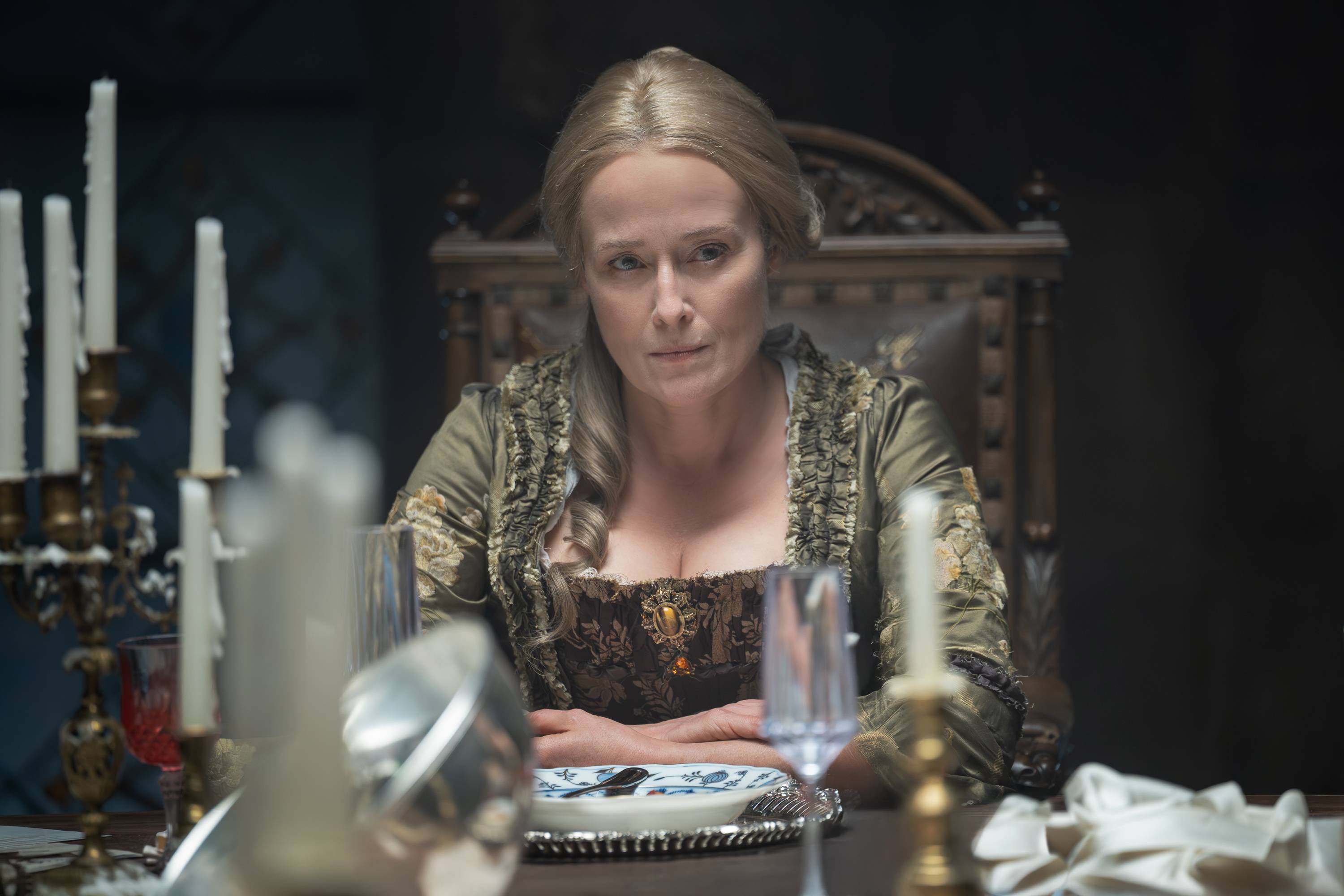
These scenes recount some of the Lestat’s formative experiences, mostly attempts to escape the dreary confines of his castle and “cabbage” family, first to study at a monastery and then to run off with an acting troupe. All these attempts were thwarted by his father and brothers. Book Lestat finds some purpose in hunting the family lands and it seems to be the case here as well. Later, when the villagers petition their lord to kill a pack of wolves preying on their land it is Lestat who is called upon to hunt them.
This sequence of hunting the wolves is a huge part of the mythology of the Vampire Chronicles and the forging of Lestat’s character but the episode gives us only the briefest glimpse of it. Of the eight wolves we only saw some movement in the bushes and a single shot of one wolf charging the camera. I couldn’t help be disappointed by that but it is not inconceivable that we get more of it in future episodes. That said, I’ve seen enough bad CGI wolves in shows over the years to understand it might be a better option to show less than to show bad. This puts me in mind of the first few seasons of Game of Thrones where battles largely happened off camera, only to be described later, theater-style.
Gabriella dresses his wounds and describes all the unspeakable things she would do if she had the freedom to do them. This element of her character gives Gabriella resonance. She represents any woman who has felt constrained by the trappings of her gender, the inability to go and do whatever she wants. Gabriella represents a desire for pure freedom, which she only ever experiences once she gets the blood.
She also lets Lestat know that she is dying of consumption. As he describes her in the episode, Gabriella is a “complicated hang.” I think the show largely does a good job realizing this character, despite the needlessly incesty vibe and the sometimes distracting accent (although now we know where Lestat got his Donatella Versace-esque Euro-mumble). We repeatedly see Lestat’s desperate love for his mother and her inability to really reciprocate his feelings. As in the book, the two are fundamentally misaligned in how they look at the world, with Gabriella being far colder and more ruthless than her son. Their coming together happens much differently in Rice's book but here we get to see Lestat at kind of a low point and he is clearly needing something from Gabriella that she is incapable of providing to him. Perhaps there is another character on the horizon who might fulfill his maternal needs...
Lestat awakens and has to contend with the fallout from his skirmish with the Fang Gang last week and his bandmates coming to terms with him being an actual vampire, which raises some awkward and funny questions. As always, the bass player Salamander has some of the funniest asides and business. They specifically have a bunch of Interview with the Vampire-related questions. “When was the last time you saw Armand,” earns a scowl from Lestat. He reminds them that he lived for 54,554 days before meeting Louis.
Speaking of Louis, it turns out he is the owner of the Dracula’s Daughter hotel in which the fight occurred last episode and they attend mediation with their lawyers which spirals into trolling and accusations. Lestat is repped by his manager/lawyer Christine and Louis by a gorgeous vampire lawyer named Lemuel who I do not believe is a character from the books. This whole scene had previously been released and I kind of love it. These vampires—both in the books and on the show—are extremely petty.
Louis attends Lestat’s show in Toledo and the two share what is almost a lovely moment which Lestat ends by slapping a well-annotated copy of Interview before him. This scene with Lestat floating above the frozen crowd while singing looks gorgeous. Daniel and Louis finally catch up in a restaurant in another previously-released scene. Lestat is not in this scene and his narration acknowledges the point-of-view questions this raises which he waves away much in the same way his book counterpart does in Queen of the Damned. He also bitchily states that his depiction of the two will have “less whining,” a burn that recalls Cruisestat.
Lestat’s night with Gabriella ends on a sour note as she asks him about Louis. Also Lestat seems to realize why they parted ways in the first place. We flash to a montage of scenes depicting Gabriella’s transformation into a vampire which seems to happen almost exactly as in the book. Although the flashback seems to indicate that the two travel back to Auvergne to kill the remaining de Lioncourts, which I am writing off as fantasy. Not only is that not how they die in the books but it is a seemingly impossible trip for two fledgeling vampires to make.
Now, agents from the Talamasca have been floating around in the background this whole episode and Raglan James and (Real) Rashid cut into Daniel’s meeting with Louis asking for his help to clear out the remaining Fang Gang coven members. Apparently, the coven has been unusually active and disruptive lately, seemingly related to the Great Conversion event that has been repeatedly referenced in Interview with the Vampire as well as the Talamasca series. Even in this episode Gabriella references it as something she knows about. Louis initially demures until they mention that Bruce—the vampire who had abducted Claudia—is leading the coven.
Notes:
- Gabriella tossing jewelry to the monks so that they would teach Lestat Italian writers is very in line with the book version of the character who had a seemingly endless stash of jewels.
- Could they not get someone who looked more like Sam Reid to play Teen Lestat?
- Do French people when speaking French have what we would call French accents?
- Is Salamander just Donald Ducking it every time he is offstage? This dude is hardly ever wearing pants.
- Man, Lestat is determined to name drop Akasha at every opportunity.
- Gabriella and Lestat have seen each other twice in the last century. Later she mentions she had seen the “aftermath” of Louis and Claudia’s attack. It seems she might have gone to his aid after Louis and Claudia left for Europe. His infusion of her blood likely helped him heal. It makes me wonder if the Lestat described in the Theatre Des Vampires performance was actually more injured that he was depicted in IWTV season two, in which he seemed fully-healed with no visible scars.
- Louis is going by the name Thomas Pitt. Maybe Lestat goes by Bradley Cruise…
- “Santiago I could understand, at least he had presence!” Lestat shitting on Armand will never not be funny.
- “You’re looking younger Daniel.” If the show goes for many more seasons are we setting the stage for replacing Bogosian with the actor who plays young Daniel? Bogosian is in his ‘70’s and you could fudge the lore to say the blood is de-aging him. It’s not in the books but neither is vampire eating and pissing. Although he would likely lose the Low-Hanging Balls Gift.
- Farid Vampire Watch: Definitely still not a vampire.
- This Lestat is going through great pains not to kill people with a “farm” and volunteers donating blood which he transfers into his victims.
- Has The David Talbot Watch Ended? It is implied that Louis killed a Talamasca member referred to as “Agent Talbot.” Book readers have been anxiously awaiting the debut of a character named David Talbot, who during this time was the Secretary General of the Talamasca and a character who becomes a close associate of Lestat and plays a very large role in The Tale of the Body Thief. Here it seems to be indicated that he is killed offscreen and what’s worse Raglan states “None of us really liked him much.” In the after show they address this and show runner Rolon Jones gleefully acknowledged that they killed him offscreen. This seems like trolling to me. I feel like he may in fact show up before the season is over. It better be.
Monday, June 8, 2026
The Vampire Lestat, Episode 1: Detroit


Thursday, June 4, 2026
Masters of the Universe: The Greatest Toyline of the 1980’s

The first half of the 1980’s was a golden age for toys and action figures. Toys and action figures were comparatively popular with kids because there was really less to do than there is now. TV was limited. Home video was just becoming a thing and there was a lull the popularity of home video games. Under these conditions, the boys action figure market exploded with dozens of popular lines, some truly massive with vehicles and large complex playsets which would be unthinkable in today’s limited environment.
Star Wars was still massively popular and its revolutionary 3 3/4” line was going strong into 1984. GI Joe is another iconic toyline that became very popular at the time, with its super-posable action figures and perhaps the most impressive vehicle fleet ever created in an action figure line including a legendary 6' long aircraft carrier. The Transformers series had been cobbled together from a few different Japanese toy lines and brought intricate, ingenious toys to the US, most of which were both action figures AND vehicles.
You can argue that any of the above are the greatest of the ‘80’s, but for my money, Mattel’s Masters of the Universe beats them all as the most iconic toy property of the decade. MOTU was wild, diverse, and unabashedly ‘80’s with its decidedly chunky figures, funky color schemes and messy, all-inclusive approach to genre. To paraphrase the SNL character Stefon, this toyline has everything: Spitting snake people, cowboys, patchouli oil, citrus gorillas, an elephant firefighter, and a witch with jaundice. I can't overstate how weird it was.

However, Masters of the Universe started much less weirdly as Mattel’s attempt to create toys around the Conan the Barbarian property but when they could not get the rights they created their own line of fantasy toys. The Conan influences were very heavy in the early MOTU line which had a dark fantasy aesthetic fueled by the evocative paintings on the package art and the novel “minicomics” that were included with each figure. In this original iteration of MOTU, there was no Prince Adam. He-Man was a jungle barbarian recruited by the Green Goddess, a character who was an early combination of Teela and the Sorceress.

In the year and a half before the popular cartoon came out, these minicomics were the main media associated with the toys and they were filled with monsters and dark imagery. MOTU's villain, the skull-faced Skeletor was a character who was remarkably “metal” for a kids toyline and a lightening rod for 1980’s Satanic Panic. The skull iconography carried over to Castle Grayskull, the location which was the focal point of many of the stories and the larger struggle.
The toys featured a new squat and muscular 5 1/2”inch scale, a unique size that was larger than the then-popular 3 3/4” inch lines like GI Joe and Star Wars but smaller than the traditional 12” scale action figures of yore. While they had only the standard five points of articulation for the time, each figure had a standard feature, a waist that would spring back when turned allowing the characters to perform a punching or swinging motion, which was great because each figure came ready to fight. The original 1980's toy series was notable for the very generous inclusion of interchangeable pieces of weaponry and armor. He-Man, himself, came with a harness with a built in weapon sheath, a sword, an axe and a clip-on shield. As the line grew, it included various weapons packs with recolored weapons and armor that added additional customization and play value. This is no surprise coming from Mattel, the company that gave us Barbie and her endless accessories and costumes.
The original wave of MOTU consisted of seven action figures which give you a good taste of the diversity of the line, and its penchant for strategic parts re-use to save costs. Joining He-Man on the Heroic Warriors side was Man-At-Arms, who instead of being perhaps a medieval knight, has some armor that is relatively high-tech and futuristic, giving us a taste of the sci-fi elements that MOTU would grow to encompass. The Green Goddess was changed to Teela, a female character armed with a serpentine staff and cobra armor, although those last vestiges of the Goddess would fall away when MOTU made the jump to animation. Stratos was a simian character with strap on arm wings and a jet pack, a great example of the "throw everything against the wall" approach to the line's character design. On the side of Skeletor's evil warriors were Beast Man and Mer-Man, two staple fantasy archetypes. Zodac was an odd character, neither aligned with heroes or villains.
In further waves the line's penchant for attention getting gimmicks would be revealed. Heroic warriors Man-E-Faces and Ram Man were defined by their unique action features. Man-E-Faces, had a unique helmet with a knob built into the top and when the knob was turned you could cycle through a trio of different "personalities" such as a man, a robot, and a beast. Ram Man had a unique mold with spring loaded legs and could be launched at other characters. MOTU was the most kinetic of 1980’s action figures.
Like Man-E-Faces, Evil Warrior Triclops featured a play feature with a rotating mechanism on his helmet, showing off different cyclopic eye expressions. Trap-Jaw might be the best action figure of the entire line featuring an articulated jaw and a funky colored pirate-esque design. He always came with a trio of swappable arm attachments including a rifle, a hook and a claw. If that wasn't enough you could run a string through the loop soon his helmet and make him zip down a line.

Another fun element of Master of the Universe is the use of truly terrible character names. These fall into three genres: Lazy, Ridiculously On-The-Nose or Vaguely Dirty. In the Lazy category, most often they would just take the main characteristic and put “-or” or Man at the end, like: Stinkor, Grizzlor, Mosquitor or Mer Man, Goat Man, and Beast Man. In the second category Clawful, Two-Bad, and Evil-Lyn. Of course, Clamp Champ, Mantenna, and Fisto sound Vaguely Dirty.
The line soon expanded to more action figures, creatures, vehicles, and multiple playsets, including two of the best action figure playsets of all time, Castle Grayskull and Snake Mountain. Juxtaposing sci-fi and fantasy, the vehicles in the MOTU line included some of the expected analogues for jets and tanks but also some very outlandish and ridiculous rides, like the hilariously impractical Dragon Walker.
Once the Filmation cartoon began to air in 1983, Masters of the Universe really took off in popularity. The animated series, however, eliminated the hint of violence and danger in exchange for colorful, moralistic storytelling. The animated show also fully embraced the sci-fi elements of the burgeoning franchise, which reflected back in the toys which exploded in diversity of bizarre and sometimes contradictory concepts.
In one toy line you had a ninja, a clockwork robot, a cowboy, a green-flocked ape man that smelled like Pine-Sol, a mosquito man with “blood” in his chest, a dude with a big wheel in the middle of his body, a Medusa man, and some dudes who literally transform into rocks. You could literally throw any concept in there and it would work. This diversity of genres and styles really made MOTU something special. When you played with Star Wars or Transformers, you were locked into the narrow parameters of SciFi. By the same token, GI Joe locked you into a military adventure. By contrast, MOTU was a kind of young boy’s fever dream of adventure and imagination.
Wednesday, June 3, 2026
Chronicles of Eternia: The Three Towers (Part 3)
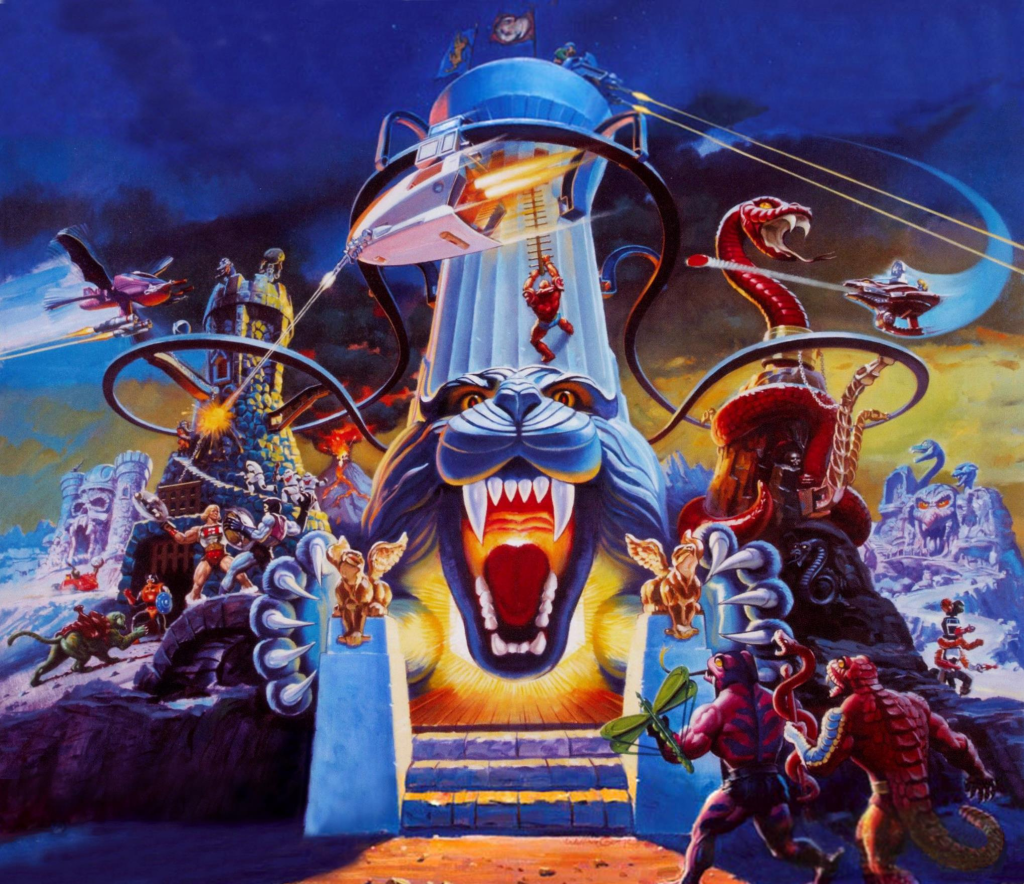
Note: The following is an exercise in creative writing and FAN FICTION it is in no way condoned by Mattel or any other entities associated with the Masters of the Universe brand. It is simply one long-time fan's expression of his love for the universe. This is a little writing project I worked on for fun between writing my own books. I'll post a few more of these but the piece was in no way ever finished.
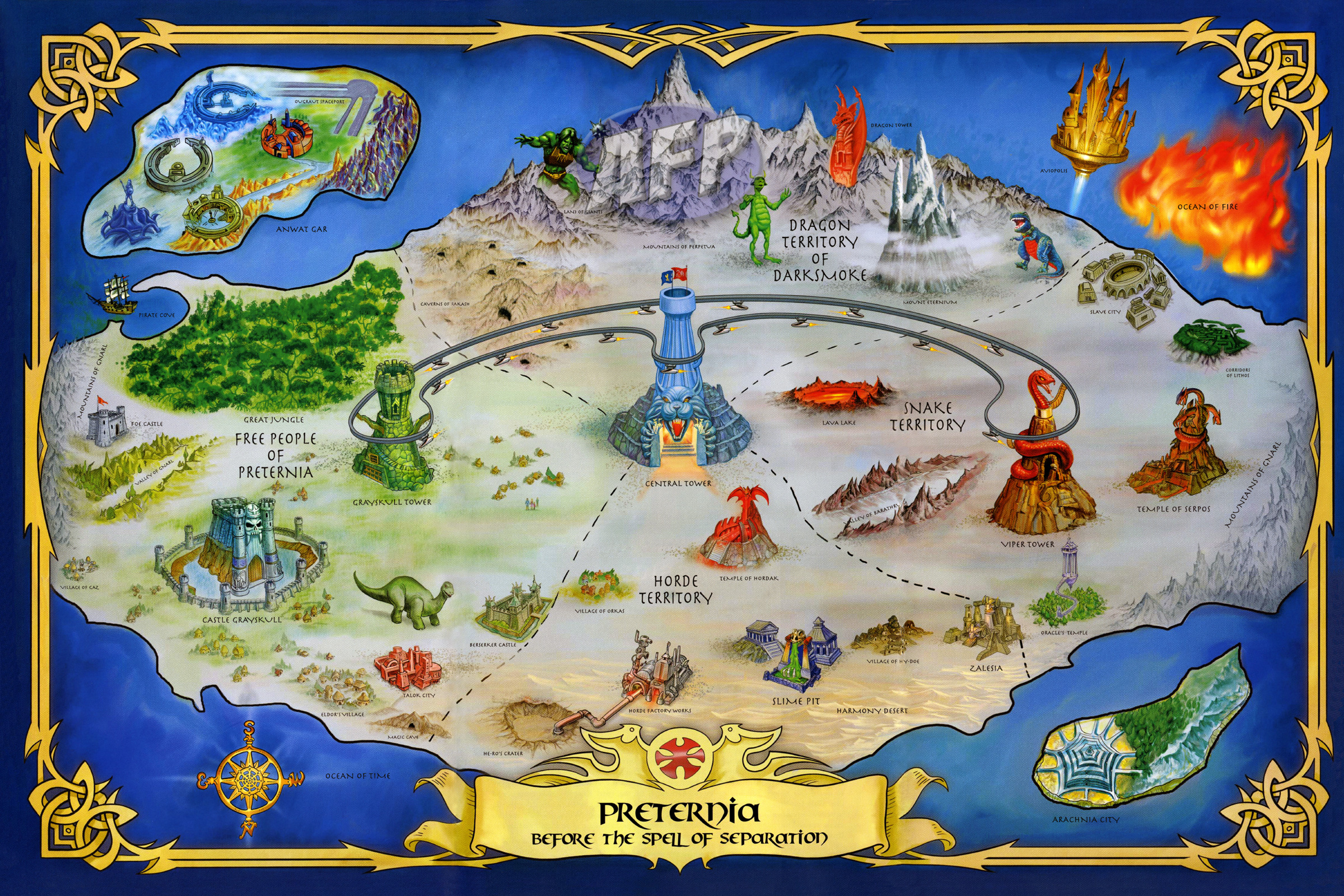
It is largely based on MOTU-lore as established from action figure bios in the now-defunct Masters of the Universe Classics brand which was a line that ran for about a decade starting in 2008. That lore was drawn from decades of material in the wonderfully pulpy mini-comics packaged with the 1980's action figures and also from comics and animated shows, in this case particularly from the wonderful 2002 series-known as 200X in the fandom-which did a wonderful job on consolidating that lore into a cohesive story. The story below is set in the Preternia era of the continuity, established in the 1980's toward the tail-end of MOTU popularity and designed to be the Next Big Thing in the toyline, introducing characters like He-Ro, Eldor, and Tytus. The 200X cartoon had added some very cool elements to this era and this story is meant to be congruous with that story. It is set hundreds of years in the past of Eternia. That said, you won't find characters like He-Man, Skeletor, Man-At-Arms, Orko, etc. But you will find some familiar characters who were around at that time as well as some cool deep-cut MOTU references and easter eggs.
He-Ro leapt to his feet, throwing off the blanket that had covered him. He called the Sword of Power to his hand, and it flew from its resting place on the floor into his palm. The Cosmic Warrior assumed a defensive position, staggering slightly on his legs. His head was throbbing.
An old man sat cross-legged before him. The man looked up from his book and smiled blandly in He-Ro’s direction. In the shadows, a colossal figure lurked nervously. A ball of light hung above him and reflected against the shiny black walls. The wind howled in the distance. He-Ro felt waves of calm flow into him from the sword, and he relaxed, collapsing into a seated position on the floor.
“Well, you shouldn’t do that again,” the old man said, closing his tome with a heavy thunk.
He-Ro regarded him, the power of the sword allowing him some understanding of the language.
“Where...am I?”
“We’ve brought you to the Obsidian City. Thanks to that sword of yours.”
He-Ro noted the interest with which the old man glanced at the Sword of He.
“And also, our large friend.”
At that moment, the enormous figure that had been hiding in the shadows stepped into the light. He was at least twice the size of a normal human and possessed of a powerful frame, but there was something gentle and disarming about him. He looked more worried than fearsome.
“Tytus found you near his home in the mountains west of here.”
“Well, then, Tytus,” He-Ro said, offering his hand, “I think I may owe you my life.”
Tytus tentatively wrapped his gigantic hand around He-Ro’s.
“I am He-Ro. What has become of my ship?”
“I left it where it crashed. It is about a day and a half’s walk.”
“On foot? Do you not have vehicles of any sort?”
“My friend,” the old man chuckled, “I’m afraid you will find us a simple people.”
“Simple,” He-Ro said, looking up at the free-floating ball of light and heat, “but not without resources. What is your name, wizard?”
“I am called Eldor.”
“And what do you call this planet?”
“Well, most of the people who live here would not even agree that it is a planet, but this land is called Eternia.”
“Eternia,” He-Ro repeated. “I must get back to my ship.”
“You must rest, He-Ro. You were injured besides being infected with the strangest disease I have ever encountered.”
Eldor held out a vial containing a sample of the metallic contagion.
He-Ro remembered the blinding pain and the awful quicksilver taste as the contagion slid down his throat and deep into his body. He had been trying to fight it off as it made its way into the cockpit, using all of his skill as a healer to render it harmless, but it had been too strong for him.
“How did you cure me,” He-Ro asked in wonder.
“As you said, we do have our resources. You’ll find that what Eternia lacks in technology we make up for in magic.”
He-Ro was instantly reminded of his own homeworld, Sul Dagara, destroyed by the Horde.
“Eldor, we have to get to my ship.”
“Tomorrow, you can at least rest for the night.”
“You don’t understand. I may not have come alone. It’s possible that there are others. Many others. And they may wish to conquer your world.”
“Ah,” Eldor smiled bitterly, “but if they wish to conquer Eternia, they’ll have their hands full. You see, there is no shortage of would-be conquerors here.”
******
The hateful southern heat did not agree with Vikor. While he and his company of tribesmen had stripped down to their fur loincloths, Vikor had refused to abandon his bear hide cape and fur-lined horned helmet. Both articles had cost him dearly, and he had the scars to prove it.
Also hard-earned were the braces on his wrists, the remnants of his time in a Snake Men slave camp. His kinsmen had offered to remove them, but Vikor chose to wear them until the day that the hated serpents were defeated. The jangle of the trio of links attached to his left arm was a constant reminder of a debt that needed to be repaid. The Snake Men’s general was not the only one with a deadly rattle.
Vikor was, above all things, a Northerner. While the scholars said that men had originated in the southern plains, they had been over many generations chased into the northern mountains by the advance of the Snake Men, whose infantry could not abide the eternal wintry cold and rough terrain. Because of this, human villages had survived in the mountains and developed a thriving and distinctly Northern culture, despite comprising refugees from all of Eternia's human settlements.
His party descended from their path into the foothills of the mountains of Perpetua. Beneath them spread the Plains of Darksmoke and, in the far distance, Eternia Tower, the fortress of the Quadians, and Eternia’s highest structure. Once they were closer to the great tower, they would camp beneath its watchful gaze, which offered what little protection there was to be had on these treacherous plains, long the domain of the Snakemen until the recent Treaty of the Three Towers had been negotiated.
“It’s beautiful,” said Zeelhar, one of a pair of orphaned brothers originally from a coastal village in the south who were Vikor’s wards.
While Vikor wouldn’t describe it as beautiful, it was certainly an impressive sight. The tower rose majestically from a thick base on which was built a fierce stone tiger head, in keeping with the Quadian’s feline appearance. Eternia Tower had been their sole enclave as far as anyone could remember.
“Aye,” responded his Weapon Master, Arndal. “And it is the most secure structure on Eternia. Even the entire Snake army couldn’t take it down. The viper tower is but a pale imitation.”
“And about my cousin’s tower the less said, the better,” jibed Vikor.
“Have you been inside? The Eternia tower that is,” asked Car’Tor, Zeelhar’s brother.
“Yes, yes. I was there for the treaty signing.”
“And what’s it like on the inside,” Zeelhar demanded.
“Tell us!”
It was a somewhat annoying game they liked to play with the notoriously grumpy Vikor, enthusiastically peppering him with questions and surrounding him like a pair of yapping puppies. In his heart, it pleased him greatly that they could enjoy carefree moments after having lost so much at such a young age. Building trust with them when they first came to him had not been easy.
“Lads,” he said with a fleeting grin quickly replaced with his usual stern expression, “stifle yourselves. The inside of that tower is not for men. It’s designed for the Quadians who have sharp, strong claws made for climbing. The inside is all wood, and the Quadians climb to the different levels where they live in little suspended canvas dens. Don’t get me started on the smell in there.”
While the South may have been man’s ancestral home, to Vikor it was nothing but a trap. He had told the council-and their hand-picked king, his cousin DaVann, as much before, and he would tell them again to their faces. If DaVann wanted to abandon the safety and security of their home village in the Valley of Gnarl for a fool’s mission, let him. This would be Vikor’s final trip south.
****
The odd trio of Tytus, Eldor, and He-Ro came upon Tytus’ camp only to find it ravaged by one of the vicious Theropods. As they came upon the scene, the dinosaur was eyes deep in his beloved Gyga, his snout digging deep into her ribcage. Infuriated, Tytus reached for his war hammer, but Eldor motioned for him to freeze. Still somewhat weak, He-Ro leaned on his staff and looked on with horror.
“My herd,” Tytus lamented. “I have nothing now.”
The Therosaur pulled his head up and instead of red blood, its mouth slathered in the same quicksilver fluid which had been oozing from He-Ro’s wounds. It worked its jaws, puzzled as the silver slime, instead of dripping, ran back, coating its head. As the substance integrated with its new host, they could see biomechanical attachments sprouting from the creature’s head. The Therosaur tried to shake the substance off its head. It finally noticed the three and roared in their direction only to have the strange mechanical growths on the sides of its head fire a pair of energy beams over their heads, cutting the tops off a pair of trees. The Therosaur tilted its head, confused, and ran off into the forest.
“What manner of sorcery is that,” asked Tytus.
“No sorcery,” He-Ro replied. “It’s a kind of illness created by the Horde.”
“It seems the illness is spreading,” Eldor said.
“Won’t it contaminate other creatures,” Tytus asked, looking down at the body of his precious Gyga, upon which the metallic illness seemed to work.
“We’ve no time to chase that thing down. I must get to my ship. If the Horde is on Eternia, you are all in terrible danger.”
“My friend,” Eldor looked up at Tytus. “Please show us the ship.”
They ventured to the neighboring valley where He-Ro’s ship had crashed. Ro hobbled to it and disappeared with Eldor in tow. Tytus saw them reappear in the control compartment from which he had pulled He-Ro mere days ago, but which to him had seemed like long months.
“Step back,” He-Ro yelled to them before the cockpit sealed around him. Tytus obliged and watched as the ship shuddered and freed itself from its crash site. The ship hovered, righted itself, strafed clear of the crash site, and lowered gently. He-Ro descended from the craft, the old man seemingly in a state of quiet amazement.
“It appears your planet Eternia is in completely uncharted space. Not that it matters. She’ll not get off-world again, not without extensive repairs. Have you really no technology on this world?”
“The Gar have technology. Quite advanced…by our standards. They might be of some assistance. They live on an island in the Sea of Rakash, off the west side of the continent.”
“We might make it there depending on how far it is,” He-Ro said.
“I would like both of you to come back with me,” Eldor ventured. “He-Ro, you must warn the council and our new king about the danger of this Hordak. And Tytus, you shouldn’t stay here alone in the ruins of your old life. Come south and start another amongst the Free People of Eternia.”
“Do you want to go for a ride,” He-Ro asked the giant.
“Me? In that thing?”
“It has an ample cargo hold.”
Titus regarded the crashed ship fearfully.
Featuring:


