Check out Part1 here.
After Good Morning Vietnam Robin Williams was a full-fledged movie star and the period of 1988-1997 saw him at his most prolific and featured many of his best movies and performances. This period of his career was notable for its incredible variety of genres, quality, and even screentime. Throughout his career, Robin Williams was not shy about taking meaty cameos, voice-over parts, and juicy supporting roles.
One such memorable supporting role was that of an unconventional English teacher who inspires a group of students at a '50's prep school in Dead Poets Society. This movie is the WASP version of the Inspiring Educator genre that was very popular in the '80's and '90's, that included everything from Stand and Deliver, to Lean on Me, and even more recently School of Rock and Harry Potter and the Prisoner of Azkaban. Dead Poets Society was released in 1989 to much acclaim and Williams received his second Oscar nomination for this performance. Those of us who were teenagers when this movie was released will always have a special affection for Robin Williams. He was the teacher we all wanted and few had. This role is so iconic that it has reverberated throughout popular culture and his performance has become shorthand for any inspirational teacher and has been parodied in everything from The Simpsons to Community. Williams gives a mostly restrained and credible supporting performance and leaves most of the heavy lifting to the young cast.
1990 saw a pair of great performances in Cadillac Man and Awakenings. Cadillac Man is one of Williams underrated and mostly-forgotten performances. He plays a sleazy car salesman who's philandering finally catches up to him when his dealership is taken over by an armed gunman. Here, Williams experiments with playing a unlikable character as he would in some of his later movies. In Awakenings he plays Dr. Oliver Sachs who's treatments allow a comatose patient played by Robert DeNiro to temporarily regain consciousness. Williams gives another and quiet and restrained performance in the less flashy of the two parts.
In the following year, Williams starred in Steven Spielberg's bloated Peter Pan sequel, Hook, a movie that manages to showcase the worst qualities of everyone involved. He also had a small but pivotal role in Kenneth Branaugh's terrific thriller Dead Again. His third movie that year was Terry Gilliam's The Fisher King, featuring what is probably Williams' finest performance for which he received his third Oscar nomination. Williams plays Parry, a homeless man with a traumatic past and medieval delusions of knights and quests. It is Williams at his most genuinely sweet and sympathetic without ever becoming saccharine. It doesn't hurt that he is surrounded by amazing performances by Jeff Bridges, Amanda Plummer and Mercedes Ruel, who won a Best Supporting Actress Oscar for this movie. This is another one of his movies that a lot of people haven't seen and which seems to have been forgotten among all of his big hits.
Perhaps Williams' most iconic performance is one in which he cannot be seen at all. In 1992, Williams delivered a show-stopping voice-over performance as the Genie of the Lamp in Disney's Aladdin. While Williams had seemingly been working hard to get away from his stand-up style wild free-associations in his movie roles this was a part actually built around his wacky improvisations, voices, and impressions. The animated shape-shifting genie could keep up with Williams' mouth in way that even his body couldn't. Robin Williams' work in Aladdin elevates the movie from a good Disney movie from their 1990's renaissance to a spectacularly entertaining classic.
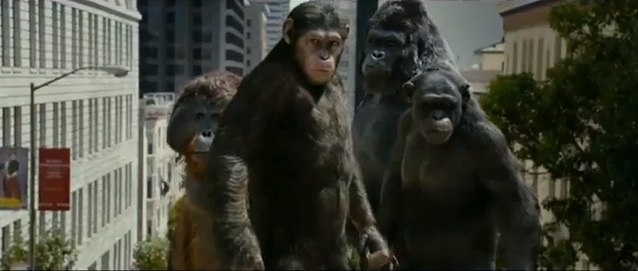
We take it for granted now but prior to Aladdin, it wasn't common for movie stars to lend their voices to animated movies. Voice over work in animated movies (which were almost all annually-released Disney movies at the time) we done by character or voice-over actors. After Aladdin, a lot of a-list actors and movie stars began loaning their voices to animated movies. Because of Williams' stature and the phenomenal quality of his work in the movie, the industry began talking about how to honor the work of voice-over actors and the nature of a "virtual performance." There was even a campaign to have him nominated for an Academy Award for his work. This conversation is still happening to this day thanks to the amazing work being done by performance capture actors like Andy Sirkis but its genesis was with Robin Williams in Aladdin.
In 1993, Robin Williams released his biggest live-action hit and turned in another iconic performance in Mrs. Doubtfire. This movie is pretty much the definition of a movie star vehicle. Williams' manages to save a tired premise (straight guy in drag), a bad script, and generic direction through one of his funniest performances and great character work as the titular elderly Scottish nanny. For better or worse, it remains the movie with which he is most associated.
Over the next few years Williams worked in a number of movies in both starring and supporting roles. 1995's Jumanji, a family special effects adventure, was a popular movie for Williams. He also appeared in movies such as Nine Months, To Wong Fu Thanks For Everything Julie Newmar and Kenneth Branaugh's Hamlet.
In 1996, Williams reprised his role as the Genie in the second direct-to-video sequel to Aladdin after a contract dispute kept him out of the first one. The same year Williams starred in Jack directed by Francis Ford Coppola, the story of a boy with an advanced aging syndrome. This movie marks the beginning of a trend in Williams' career towards high concept, sentimental movies.
His other major movie in 1996 was one of his best: The Birdcage adapted from the 1970's French comedy La Cage Aux Folles about a gay couple forced to pretend to be straight for a dinner with their future in-laws. Birdcage has all the hallmarks of a great Robin Williams movie. First, the movie teams him up with comedy legends and director/writer team Mike Nichols and Elaine May who infuse the movie with a sharp satirical edge. It also gives him a talented cast witch which to play, including Nathan Lane, Diane Weist, and Gene Hackman who all turn in hilarious performances. While technically his cameo in To Wong Fu was his first gay movie character, his role in Birdcage was pretty fearless for a high-profile heterosexual actor, during a time when there was still a heavy stigma attached to homosexuality. While actors like Tom Hanks and William Hurt had done these sort of roles in the past, it was in movies that were marketed as "serious" Oscar contenders.
For his reputation as a free wheeling motormouth wild man, Williams was an excellent straight man and was often at his best simply listening and reacting to the characters and situations around him. In some of his best performances, he is far from the most outrageous character in the movie and that is certainly the case in The Birdcage, where he is often paired with Nathan Lane, who plays his flamboyant partner. Williams is great as his character struggles to keep together this dinner party which is constantly veering out of control.
In 1997 Williams appeared in a number of movies such as a memorable part as an actor who was literally out-of-focus in Woody Allen's Deconstructing Harry. He also starred in the remake of Flubber, another one of his high concept family comedies as well as the critically panned Father's Day with Billy Crystal. He was nominated for his forth Oscar and won the Best Supporting Actor Academy Award for Good Will Hunting, a breakout drama for both Matt Damon and Ben Affleck for which they both won Best Screenplay Oscars. Williams achieved what had to have been long-held goal and finally got the recognition and respect he deserved.
Patrick Garone
Follow Me on Twitter
Perhaps Williams' most iconic performance is one in which he cannot be seen at all. In 1992, Williams delivered a show-stopping voice-over performance as the Genie of the Lamp in Disney's Aladdin. While Williams had seemingly been working hard to get away from his stand-up style wild free-associations in his movie roles this was a part actually built around his wacky improvisations, voices, and impressions. The animated shape-shifting genie could keep up with Williams' mouth in way that even his body couldn't. Robin Williams' work in Aladdin elevates the movie from a good Disney movie from their 1990's renaissance to a spectacularly entertaining classic.
We take it for granted now but prior to Aladdin, it wasn't common for movie stars to lend their voices to animated movies. Voice over work in animated movies (which were almost all annually-released Disney movies at the time) we done by character or voice-over actors. After Aladdin, a lot of a-list actors and movie stars began loaning their voices to animated movies. Because of Williams' stature and the phenomenal quality of his work in the movie, the industry began talking about how to honor the work of voice-over actors and the nature of a "virtual performance." There was even a campaign to have him nominated for an Academy Award for his work. This conversation is still happening to this day thanks to the amazing work being done by performance capture actors like Andy Sirkis but its genesis was with Robin Williams in Aladdin.
In 1993, Robin Williams released his biggest live-action hit and turned in another iconic performance in Mrs. Doubtfire. This movie is pretty much the definition of a movie star vehicle. Williams' manages to save a tired premise (straight guy in drag), a bad script, and generic direction through one of his funniest performances and great character work as the titular elderly Scottish nanny. For better or worse, it remains the movie with which he is most associated.
Over the next few years Williams worked in a number of movies in both starring and supporting roles. 1995's Jumanji, a family special effects adventure, was a popular movie for Williams. He also appeared in movies such as Nine Months, To Wong Fu Thanks For Everything Julie Newmar and Kenneth Branaugh's Hamlet.
In 1996, Williams reprised his role as the Genie in the second direct-to-video sequel to Aladdin after a contract dispute kept him out of the first one. The same year Williams starred in Jack directed by Francis Ford Coppola, the story of a boy with an advanced aging syndrome. This movie marks the beginning of a trend in Williams' career towards high concept, sentimental movies.
His other major movie in 1996 was one of his best: The Birdcage adapted from the 1970's French comedy La Cage Aux Folles about a gay couple forced to pretend to be straight for a dinner with their future in-laws. Birdcage has all the hallmarks of a great Robin Williams movie. First, the movie teams him up with comedy legends and director/writer team Mike Nichols and Elaine May who infuse the movie with a sharp satirical edge. It also gives him a talented cast witch which to play, including Nathan Lane, Diane Weist, and Gene Hackman who all turn in hilarious performances. While technically his cameo in To Wong Fu was his first gay movie character, his role in Birdcage was pretty fearless for a high-profile heterosexual actor, during a time when there was still a heavy stigma attached to homosexuality. While actors like Tom Hanks and William Hurt had done these sort of roles in the past, it was in movies that were marketed as "serious" Oscar contenders.
For his reputation as a free wheeling motormouth wild man, Williams was an excellent straight man and was often at his best simply listening and reacting to the characters and situations around him. In some of his best performances, he is far from the most outrageous character in the movie and that is certainly the case in The Birdcage, where he is often paired with Nathan Lane, who plays his flamboyant partner. Williams is great as his character struggles to keep together this dinner party which is constantly veering out of control.
In 1997 Williams appeared in a number of movies such as a memorable part as an actor who was literally out-of-focus in Woody Allen's Deconstructing Harry. He also starred in the remake of Flubber, another one of his high concept family comedies as well as the critically panned Father's Day with Billy Crystal. He was nominated for his forth Oscar and won the Best Supporting Actor Academy Award for Good Will Hunting, a breakout drama for both Matt Damon and Ben Affleck for which they both won Best Screenplay Oscars. Williams achieved what had to have been long-held goal and finally got the recognition and respect he deserved.
Patrick Garone
Follow Me on Twitter