
The first season of The Mandalorian is kind of a miracle: it was a new Star Wars project that was widely-liked and uncontroversial (not counting the nostalgic sugar rush that was The Force Awakens release) among the famously fickle fans of the franchise. Iron Man director and Star Wars: The Clone Wars showrunner Dave Filoni teamed up to deliver was is a wildly appealing and fun Star Wars concoction set about a half decade after Return of the Jedi and set un the relatively unexplored part of the Star Wars galaxy; the underbelly of criminals and bounty hunters during the New Republic period, a timeframe largely uncharted in the Disney canon (the sequel movies are set about a generation later). The show was released during a time of strife in the Star Wars fandom, shortly after the run of The Rise of Skywalker, a movie widely disliked by Star Wars fans which followed a movie which was intensely disliked by half of Star Wars fans, but to be fair, every year since 1999 has been a time of strife in Star Wars fandom. But the fans liked The Mandalorian! At least initially.
The Mandalorian in its first season is very much a simple, back-to-basics Star Wars project. Indeed, one can imagine Jon Favreau or Dave Filoni dumping out a tub of Kenner toys from The Empire Strikes Back and creating the show from old Boba Fett, Yoda, Ugnaught, Stormtroopers, Imperial Officer action figures and maybe an occasional Klatuu, IG88, ATST and X-Wing thrown in for good measure. That said, the show remixes a lot of pop culture elements that are intertwined in the Star Wars DNA such as the Space Western vibe of A New Hope and mixes it with a dash of the Japanese Lone Wolf and Cub samurai stories which had never been part of Star Wars before but feel right at home in Kurosawa-inspired world of the Galaxy Far, Far, Away and its themes of legacy and found family.
While the true origins of this show are unknown, it should be noted that there was in the early years of the Disney Star Wars era talk of a Boba Fett movie which got so far into production that it even had a director (Josh Trank) and even had Michael B. Jordan attached in some capacity. That project was one of the dozens of announced Disney projects that never made it to production and The Mandalorian followed shortly after. It is worth wondering whether this project was adapted from that film, Din Djarin, the titular character has much in common with the Original Trilogy Boba Fett: both are laconic bounty hunters only ever seen in Mandalorian armor who ride around in shambling gunships. Djarin even wields Fett's rifle used in his original Holiday Special appearance.
This would also explain the show's famously uneven pacing. Every season of The Mandalorian features a certain number of filler or "sidequest" episodes in addition to those that drive the story forward. In season one, you could essentially skip episodes four through six and not miss much regarding the core story of Mando, Grogu Gideon, and the Mandalorian clan on Nevarro. That said, those episodes are all a lot of fun but I can imagine a them having been added as part of a process of expanding a Boba Fett movie into a season of television. This is interesting to consider as The Mandalorian makes the jump from television to movie later this year.
Despite the fact that Star Wars has been episodic television in animated form for twenty years at this point there is always a lot of discussion about where the franchise belongs and how well it "works" on TV. In fact, many of these Disney+ shows have been the subject of fan cuts (certainly nothing new for Star Wars). While the first two seasons of The Mandalorian is widely well-regarded, shows like The Book of Boba Fett, Obi-Wan Kenobi, and The Acolyte have been recut by talented fans to address perceived quality or pacing issues often with fascinating results.
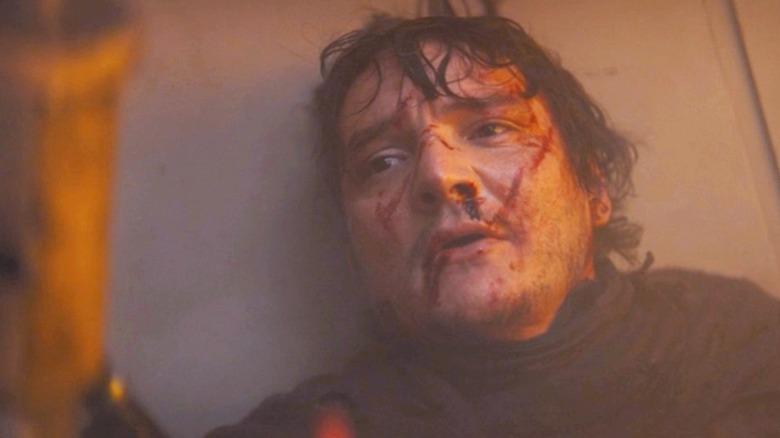
While Din Djarin is often brought to life by a pair of stuntmen, his face and voice belong to Pedro Pascal in a role that cemented him as the go-to actor for playing protective "daddy" figures to gifted but endangered children. He voices Djarin with a terse toughness, moral decency, and occasional flashes of dry humor. He initially seems like a tough-as-nails bounty hunter in the vein of Boba Fett, he reveals additional depth when his high value quarry turns out to be an alien child. After initially turning the child over the Imperials who had contracted him, Djarin has a change of heart and rescues him cementing his status as a Good Dude.

The Child-as he was known for the first season-is, of course, Grogu, a fifty year-old alien from the same long-lived species as Yoda. Din and Grogu's first meeting ate the end of episode one is an iconic Star Wars moment, especially since it was not spoiled beforehand. The Yoda species has remained a mysterious one and George Lucas has famously refused to reveal much about them, even their name. The only other member we have seen is the Jedi Master Yaddle in The Phantom Menace and Tales of the Jedi. Like the others of his ilk, Grogu also has force powers which he uses saves Din's life on a couple of different occasions, creating a bond leading to their "Clan of Two."

Grogu is of course, adorable and the creators of The Mandalorian are very adept at coming up with genuinely cute business to occupy him. While he is often in danger, Grogu is frequently seen having a blast which is part of his charm. He also is infinitely marketable and for a while the market was flooded with all manner of Grogu dolls, apparel, and collectibles.

During the season Din Djarin meets lots of other memorable characters. Strangely the series is full of lots of 1990's Second City people like Horacio Sanz and Amy Sedaris. Nick Nolte voices the Ugnaught character Kuiil, who becomes a friend and close ally of Mando in the first season and who sadly does not continue on. Taika Waititi hilariously voices IG11, an assassin droid and rival bounty hunter to The Mandalorian. Action Legend Carl Weathers appears in a recurring role as Grief Carga, Mando's Frenemy in season one. On the villain side we have Giancarlo Esposito as a ruthless Imperial Remnant Moff, and seemingly a Vader fanboy, who has a long association with Mandalore and is revealed in the season's closing moments to be in possession of the Darksaber (more on that below). And somehow they managed to get legendary director and occasional actor Werner Herzog, to bring his distinctive Austrian rasp to the role of the mysterious Client in search of Grogu and his blood which has a high "M-count" because apparently it is too triggering for some fans to hear the word "Midichlorians."
A MANDALORIAN PRIMER
As the title implies, The Mandalorian also reveals more about one Star Wars other mysterious groups, the Mandalorians. Of course the first of these depicted in Star Wars was the aforementioned Boba Fett, and he was identified as a "Mandalorian" as far back as his creation in the late 1970's in the ancillary materials that have always accompanied Star Wars. This culture has a long history in the old expanded universe, where the concept of Mandalorian steel or "beskar" was first introduced back in the 1990's. The Mandalorians were often treated like Star Wars' version of the Klingons, an honorable but warlike culture, sometimes uneasily aligned with our heroes.
Much of the old EU history was retconned even before the Disney era and Filoni has already told some of this story in animation, introducing us to the concept of the great Mandalorian ruler, Tarre Visla, a Mandalorian Jedi who was the revered ruler of his people (one of his descendants is the very big surly Mandalorian often seen with the Armorer in The Mandalorian). As is now a feature of Star Wars, we are being told the story of Mandalore and the Mandalorians out of sequence and in fits and starts, so it can be a bit jarring to jump into the story in The Mandalorian perhaps coming out of the animated shows set decades before.
Let's break it down.
We are first introduced to the culture and the planet during a couple of different arcs on The Clone Wars, which depict a culture with a warlike past but which is now governed under a pacifist reform movement. Buy this time, the Mandalorians have destroyed much of their planet through internecine wars and mostly live in giant enclosed cities on the surface. During the Clone Wars era they are led by Duchess Satine, an old "associate" of Obi-Wan Kenobi. Satine is also the sister of Bo Katan, who opposes her as part of a terrorist group called Death Watch, lead by Pre Vizla, descended from the legendary ruler.
Viszla's traditionalist Mandalorians consider the wielding of the Darksaber to be the true signifier of leadership of the Mandalorian people and look at Satine's political movement with contempt. Later in the Clone Wars, the Death Watch Mandalorians arrange to take over the planet in alignment with Darth Maul (yes, that one. Long story) but the planet is shortly liberated by the Republic, led by the ex-Jedi Ahsoka Tano and Bo-Katan who had left Death Watch after Maul took power. That's where we leave things at the end of the war. By the way, this final arc of The Clone Wars is some of the finest Star Wars content ever created, full stop. Watch it now.
We later catch up with the Mandalorians over a decade later during Star Wars Rebels in the Imperial era when we learned that the planet had defied the Empire and had been destroyed by orbital bombardments. The surviving Mandalorians had spread throughout the galaxy, thinking Mandalore cursed and uninhabitable.
During the time of The Mandalorian six or seven years after the fall of the Empire, the particular group of Mandalorians that Din Djarin is associated with is referred to as Children of the Watch, a fundamentalist group spun off from Death Watch with strict rules regarding behavior and wearing of armor. Unlike the Mandalorian survivors we see in Rebels, these Mandalorians live hidden on the fringes of galactic society. Given that these are the only Mandalorians that we see in the season, we don't yet know if all surviving Mandolarians are like this or what happened to other characters like Sabine Wren or Bo Katan, who were a little more cosmopolitan in how they mixed with other cultures and regularly were seen unhelmeted.
In many cases these Children of the Watch have no actual connection to the planet Mandalore and are only Mandalorians by creed, as is the case with Din Djarin who joined after being rescued by Death Watch during the Clone Wars. Din is not "Mandalroian" in the same sense as Bo Katan or Sabine Wren from Rebels and Ahsoka, both of whom are from old Mandalorian houses. The vibes are perhaps cultier even than the Jedi and how this all actually works has been the subject of endless speculation since the show aired.
One last thing definitely worth noting about the show is the remarkable feat of having its own musical identity in the Star Wars franchise, a series of movies that are famous for having perhaps some of the finest and most iconic movie music in the history of film. Ludvig Goransson, the Oscar-winning composer behind movies like Black Panther and Oppenheimer has here created an instantly recognizable piece of music that captures the Neo-western sci-fi vibes of the show.
The Mandarlorian is available to stream on Disney+.

No comments:
Post a Comment