 Note this entry was originally published 10/3/2009 and revised and republished on 9/27/26.
GOJIRA* (1954)
Directed by: Ichiro Honda
Genre: Daikaiju eiga
THE MOVIE:
When you think of Showa Godzilla, chances are that you picture a big goofy looking rubber dinosaur grappling with a colorful and silly opponent. Unfortunately, most people’s conceptions of the King of the Monsters are rooted in the kid-friendly and badly-dubbed Technicolor movies of the late 60’s and early 70’s when the series had sunk irrevocably into camp. Because of this, most people are surprised by the tone of the original Japanese Gojira which is an urgent and somber meditation on the dangers of nuclear testing and scientific advancement. To a Japanese audience, only nine years after Hiroshima and Nagasaki this must have been powerful stuff.
However, not necessarily original stuff: Gojira was released only a year after The Beast from 20,000 Fathoms, an American movie which also featured a giant saurian creature woken by atomic testing which goes on a rampage through a major city but because of Japan’s legacy as the world’s sole atomic victim, there is an urgency and horror to the material in Japanese hands that’s not there in the American-produced Beast as though Gojira is the fevered nightmare of someone who experienced the aftermath of nuclear holocaust. This context is what makes Gojira more than just another radioactive monster movie and gives the film a richness and resonance that it wouldn’t otherwise have.

Another interesting element present in Gojira that is absent from the re-edited American version is a level of ambivalence about Japan’s relationship with America. It seems that the direct inspiration for the movie was a 1953 incident in which American nuclear weapons were tested in Japanese waters and the crew of a Japanese fishing boat became ill from radiation poisoning. This incident is actually directly referred to in the Japanese version of the movie but cut from the U.S. version to make it friendlier to American audiences. Thus, in the Japanese version of the movie, the blame for Godzilla is laid directly on America. There is a symbolic framework in place that makes Godzilla a symbol of U.S. (possibly and or Soviet) power in the world. In this sense, Gojira is a direct ideological ancestor of the 2006 South Korean film, The Host, another film that features a monstrous result of America’s policies in Asia. There is a long tradition of implicit or explicit US criticism in the series such as in Godzilla (1984), Shin Godzilla and Godzilla Minus Zero, this has sometimes resulted in those movies having America-friendly re-edits.
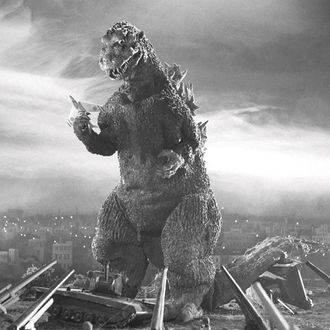
Another way to interpret the movie would be that Godzilla is visited on Japan as punishment for its aggression during the Second World War. Japan’s relationship with its wartime past is very complicated and they seem to feel simultaneously proud and guilty for their activities during World War II. In this interpretation Godzilla is a form of cinematic self-flagellation. This is explicitly the case in Godzilla Mothra King Ghidorah: Giant Monsters All-Out Attack. In Gojira, he is literally created by American nuclear testing. But the monster doesn’t go to LA or San Francisco to punish the Americans, he goes straight to Tokyo and completely destroys the city, leaving it as though a bomb were dropped on it. He punishes the Japanese. Over the years in Japanese cinema, Tokyo and other cities are destroyed over and over again. Why do the Japanese seem to enjoy seeing their cities destroyed so much? I wonder how these movies play in neighboring Asian countries that were Japanese occupied during the war. How do the Chinese feel seeing giant monsters destroying Japan? I mean, we have our big explosions and disaster movies as well but it is not as much a fetish for American moviemakers to show this level of meticulous urban destruction. In Godzilla, the Japanese are simultaneously punishing themselves and revisiting their nuclear victimization which is why Godzilla is so potent as a monster and a symbol.
THE MONSTER/EFFECTS:
THE MONSTER/EFFECTS:
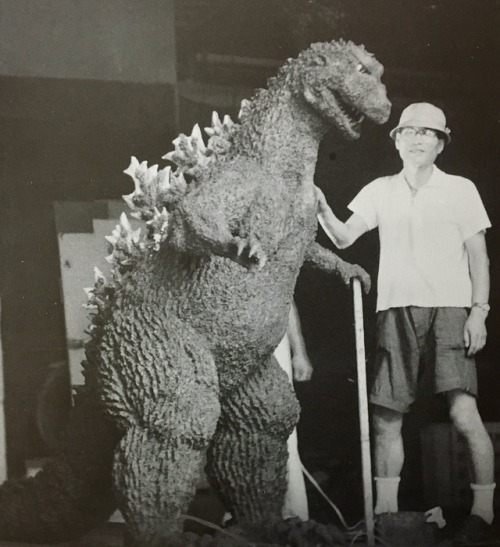
Gojira pioneered the use of “suitmation,” what Toho Studio calls the combination of rubber suit acting combined with detailed miniature sets. It has since been a staple of Toho’s Godzilla series and one they kept up well into the digital age, only recently abandoning it for their mainline movies in 2016 (it is still actively used for the short festival films they put out on a regular basis.)
MONSTERS FEATURED:
This, along with Godzilla, (1984) and the American Godzilla (1998), Shin Godzilla, Godzilla Minus One are the only films in the series to feature Godzilla without another monster opponent.
This "Shodai"Godzilla suit is really the template for the later Godzillas, which would later emphasize and de-emphasize different features. It established Godzilla as a chunky bipedal, (although tail-dragging) creature, with dorsal spines, dark, scarred skin, and atomic breath. This original version is little inconsistent in different shots where they were using a puppet but is notable for it's large eyes and mouth full of conical teeth including pronounced fangs which Godzilla has seldom had over the years. This one also gives him the stylized brows often featured in Asian folkloric art.
Since this is one of only two black and white Godzilla movies, there is some debate about what color this suit actually was. There were those connected with the movie who claim it was charcoal gray, which is the traditional Godzilla color. Others state that the suit was brown or even reddish. Most state that the suits mouth was painted bright red for contrast, which I am sure was hilarious.
MOST MEMORABLE SEQUENCE:
Godzilla’s chilling nocturnal rampage through Tokyo.
WHERE TO WATCH:
Although the American Godzilla: King of the Monsters has been available on DVD for years, the original Japanese version was unreleased in the U.S. until 2006 when the two disc set Gojira was released featuring both versions of the movie with some documentaries on Blu-ray.
MOST MEMORABLE SEQUENCE:
Godzilla’s chilling nocturnal rampage through Tokyo.
WHERE TO WATCH:
Although the American Godzilla: King of the Monsters has been available on DVD for years, the original Japanese version was unreleased in the U.S. until 2006 when the two disc set Gojira was released featuring both versions of the movie with some documentaries on Blu-ray.
As this writing it can be found on MAX (along with many of both the Legendary and Toto movies) and also on the Criterion streaming channel which is home to some of the more obscure entries of the series including Godzilla (1984), Godzilla vs Biollante and the Rebirth of Mothra movies.
Streaming rights change quickly so if you love a movie your best bet is to buy physical media.

SEQUELS:
There are currently about thirty-three movies in the Japanese Godzilla series. This one was immediately followed by:
Godzilla Raids Again (1955), King Kong Vs, Godzilla (1962) and Godzilla Vs. Mothra (1964.)
SEE ALSO:
The Beast from 20,000 Fathoms (1953) - A direct influence on Gojira released the year before.
Godzilla Vs. King Ghidorah (1991) - Through an insane time-travel plot deals with the wartime origins of Godzilla and Japan's complicated feelings about the West.
Godzilla, Mothra, King Ghidorah: Giant Monsters All Out Attack (2001) - Examines Godzilla's sometimes tortured relationship with Japan itself.
The Host (2006) - The US, making' monsters in Asia, Korea edition.

SEQUELS:
There are currently about thirty-three movies in the Japanese Godzilla series. This one was immediately followed by:
Godzilla Raids Again (1955), King Kong Vs, Godzilla (1962) and Godzilla Vs. Mothra (1964.)
SEE ALSO:
The Beast from 20,000 Fathoms (1953) - A direct influence on Gojira released the year before.
Godzilla Vs. King Ghidorah (1991) - Through an insane time-travel plot deals with the wartime origins of Godzilla and Japan's complicated feelings about the West.
Godzilla, Mothra, King Ghidorah: Giant Monsters All Out Attack (2001) - Examines Godzilla's sometimes tortured relationship with Japan itself.
The Host (2006) - The US, making' monsters in Asia, Korea edition.
Shin Godzilla (2016) -A very on-the-ground response to Godzilla coming ashore movie. This one feels a bit like the original in that it is treated as an unprecedented event and taken very seriously. This Godzilla is more informed by the then-recent Fukushima radioactive accident.
Godzilla Minus One (2023): Recaptures both the urgency and the post-war time period of the original movie.
THE TRAILER:
TRIVIA:
Godzilla was originally to be realized as a stop-motion creature like the ’33 King Kong or the Rhedosaurus from The Beast from 20,000 Fathoms but Toho Studios lacked the budget and expertise to do this so they opted to go the rubber suit method. Can you imagine how cool a stop motion Godzilla would have been?
*In Japanese, “zee” actually sounds more like “dzjee” so “Gojira” actually becomes “Godzjeera” hence the anglicized Godzilla.

If you are enjoying Monster Movie of the Week,
check out my kaiju novel
City of the Gods: The Return of Quetzalcoatl.
View on Amazon →

No comments:
Post a Comment