Showing posts with label Godzilla. Show all posts

Friday, November 6, 2026

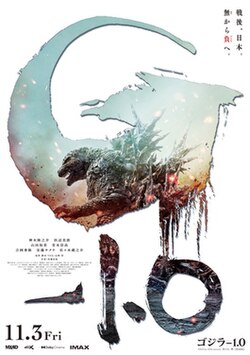
Godzilla Minus Zero: A Reviewette

***SPOILERS***


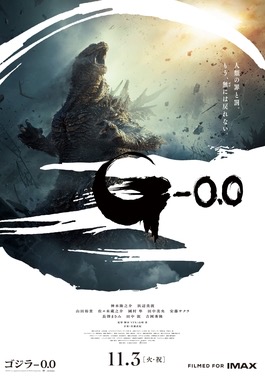
Godzilla Minus One was an incredible groundbreaking kaiju movie. Godzilla Minus Zero is a worthy follow up in every way. It continued to follow the compelling and often heart-breaking human characters from the first movie and ups the action and spectacle to almost obnoxiously-loud Christoper Nolan levels. I do think that the movie in lumbering inevitably toward monster fights loses a bit of the resonance and greatness of the first movie. 

For example, we lose track of the fascinating relationship between Koichi and Noriko. There is a significant time jump here and their ambiguous relationship is now defined marriage but we don’t get to see any of that transition. However, the movie does add some fascinating elements, particularly as it starts to cash in on the body horror concepts which were hinted at by past franchise entries like Godzilla vs Biollante and Shin Godzilla. The movies dios back into the mysterious circumstances of her survival from the Ginza Godzilla attack and her new connection to the kaiju. There is also a fascinating new scientist character who is a Hiroshima survivor who has his own plans for Godzilla.

It’s no surprise that King Ghidorah appears in this movie and as much as the character is a little played-out at this point, this is one of his better movie appearances (although not his best.) like most depictions of the character he is given a cosmic origin, this time from a meteorite housing an amorphous cosmic lifeform that seems to absorb and synthesize other animals. Indeed, this version of the character seems to take some inspiration from Orga in Godzilla 2000, another shapeshifting entity which attempts to absorb Godzilla’s DNA.

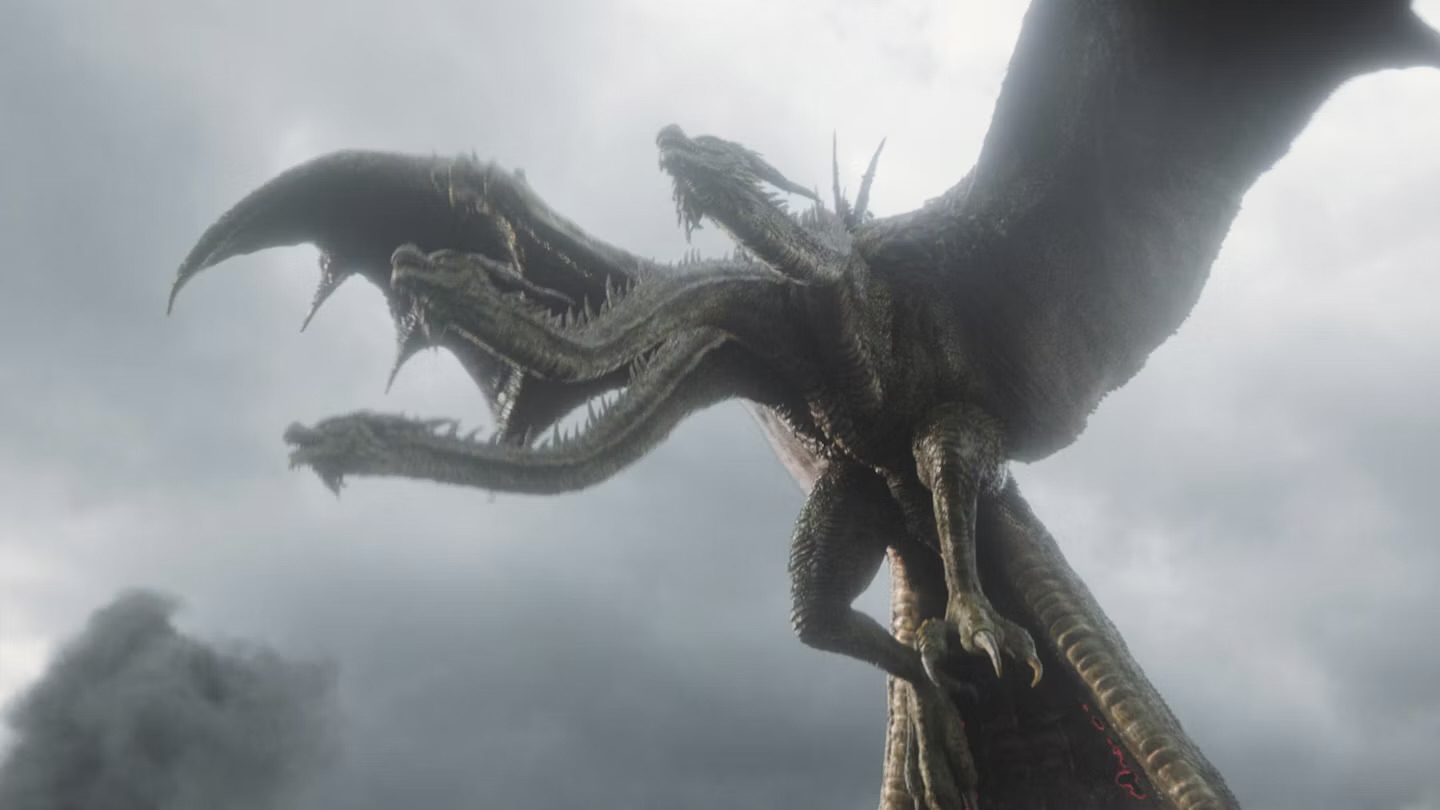
Godzilla Minus One’s Goji, Ghidorah first appears in a weaker, powered down form which is essentially a very cool dragon. It’s very nice and I would love to see a featherweight clash between this Ghidorah and Godzilla’s Odo Island beast form. Due to the failure of one of Dr. Noda’s typically overly complicated multi-phase Macguyver-esque plans to defeat the monster, Ghidorah grows into a more powerful and familiar form. This is a very nice design especially as it finally gives King Ghidorah proper clawed pterodactyl-like forearms instead of back wings and no forearms. A mix between this and the Legendary designs would probably be the perfect Ghidorah.

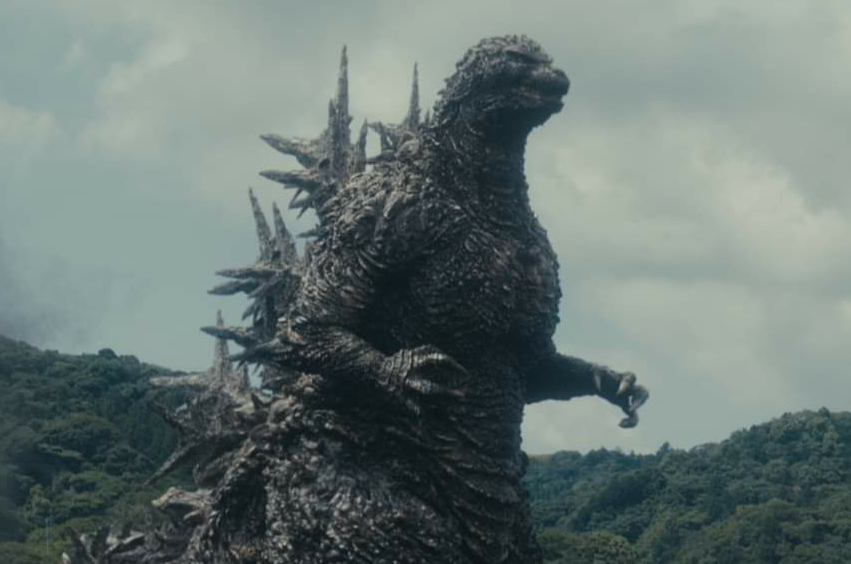
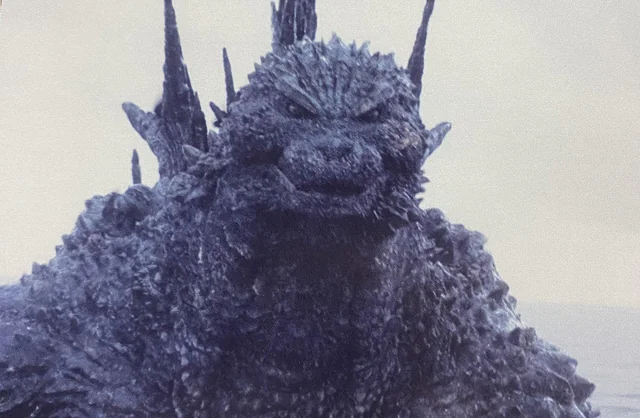
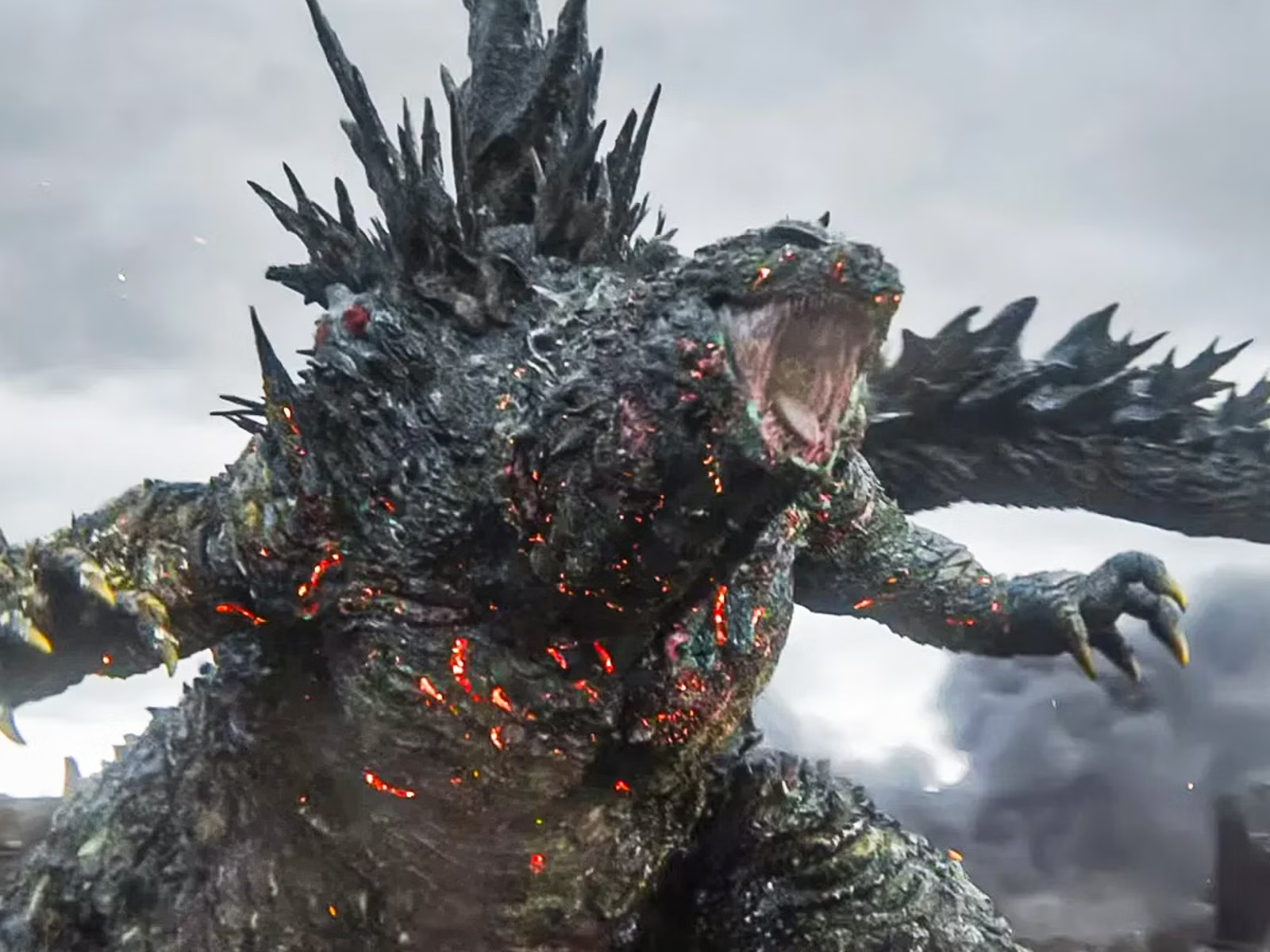
Of course Godzilla is back, really without any explanation beyond the post-credit scene in the last movie, his vaunted cell regeneration. He just sort of shows up. The Minus One design was never my favorite and this is essentially a bulkier version of that one. In some shots he just looks ridiculously puffy. Like, dude has no neck in this movie. I do dig the thagomizer st the end of his tail though.

Overall, very much enjoyed it and am looking forward to another viewing. If they make another one, this will surpass the Gamera 1990’s movies as the greatest kaiju trilogy of all time. Especially if Biollante is in the next movie.

NOTES

  • While no one actually says “Let them fight,” that’s very much the plan they come up with.
  • Is it just me or do Dr. Noda’s plans not make a whole lot of sense? I was just like “Okay, I guess…”
  • I really love these characters and I feel like things are not going to turn out well for them.
  • A lot was made of the movie’s R rating but I’m not really seeing anything that justifies this rating. 
  • Ghidorah’s gravity beams are fucking awesome.
  • The movie builds up to a fight which I would rank among the best and most brutal Godzilla fights. It is gnarly with Ghidorah ripping chunks out of Godzilla.
  • I’m not entirely sure what the American’s plans are. They seemed to hint at a plan should the Ghidorah attack fail but I missed whatever it was unless that is explored in a future movie.
  • There is a really awesome homage to the classic Godzilla vs Kong Ghidorah poster.


If you are enjoying Monster Movie of the Week, check out my kaiju novel City of the Gods: The Return of Quetzalcoatl, the story of a UFO that appears over Mexico City and gigantic Mesoamerican god who rises from the sea to confront it and the creatures serving it.
View on Amazon →

Patrick Garone

Patrick Garone

Chicago-based writer & director. Author of City of the Gods and We Lowly Gods.


Sunday, October 11, 2026

Monster Movie of the Week: Godzilla Minus One (2023)

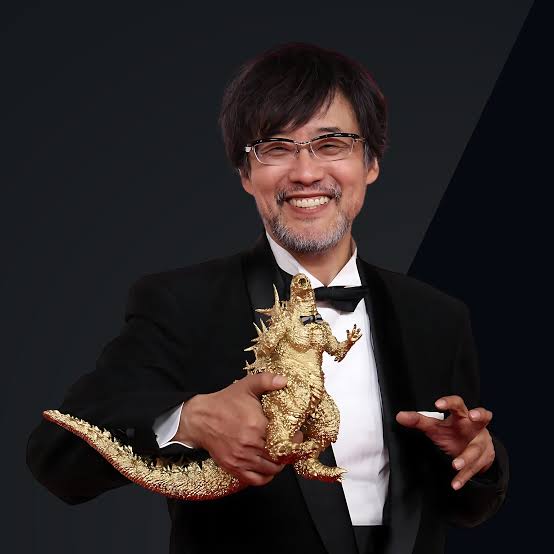
Director: Takashi Yamazaki 

Genre: Kaiju Eiga


Director Takashi Yamazaki had been circling the Godzilla franchise for a long time. His 2005 feature, Always: Sunset on Third St 2 even features a Godzilla cameo in a sequence that very much prefigured the Showa vibes and creature design of his eventual Godzilla debut, 2023’s Godzilla Minus One. G-1 is remarkable for a lot of reasons. First, it is genuinely a good movie. I am a huge Godzilla fan but I can count the number of legitimately good movies in the series on one hand. Many are fun, awesome, entertaining, even inspired, but few of them I would call well-made, high quality films but Godzilla Minus One is just that. It is a compelling wartime drama with complex character relationships that just happens to also have Godzilla in it. Ironically, that particular recipe of ingredients  might make G-1 less of a successful Godzilla experience for some people, sort of a Godzilla Minus Fun. I love it although it’s not my favorite Godzilla movie.

Another remarkable thing about the movie is its American success and prestige. US releases of Japanese Godzilla movies are not particularly common and have had a mixed track record of success, but G-1 had a record-breaking run (for a Japanese and non-English language release) and received ecstatic reviews in the US and it went on to win the Academy Award for Best Visual Effects. Let’s stop and appreciate that for a moment because it wasn’t long ago that Godzilla movies were a punchline, especially their special effects. Seemingly a lot of Toho’s creative and business decisions with the series were either in pursuit of American success or reaction to American failure, so to win an fricking Oscar must have been a huge triumph for Toho. To make it even more delicious, for a movie that was made for a fraction of the cost of its Hollywood competitors like Mission Impossible and Guardians of the Galaxy Vol 3.
As is the case for many modern Godzilla movies, Godzilla Minus One is in its own continuity and unrelated to its predecessor, Shin Godzilla nor any previous entries to the series. It is a fresh take on the creature and set in early post-war Japan. This new time setting gives is a fresh feel, which is ironic because this actual era was the heyday of the original Showa run of films. 

THE MOVIE

At the tail end of WWII with the Japanese forces facing defeat, kamikaze pilot Koichi Shikishima returns to a Japanese base at Odo Island for repairs to his plane. It becomes immediately obvious that there is nothing wrong with his plane and he is faking the damage to get out of his mission. Whether this is purely born out of cowardice or the hopelessness and futility of the war or some combination is explored throughout the rest of the movie. From the beginning, this is a very complex and nuanced characterization and Koichi is an unexpectedly compelling character. The movie is also surprisingly ambivalent about the war with characters openly questioning its purpose and value. By contrast, the official line of the Japanese government has been to celebrate the war effort, much to the annoyance of its Asian neighbors many of whom suffered under Japanese aggression in the twentieth century.
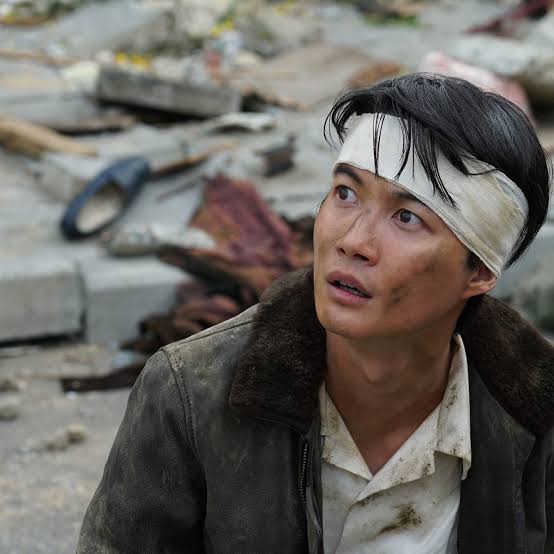
As Koichi ruminates about his situation, he notices the appearance of strange deep sea fish. The locals here have a legend of a creature called Godzilla which arises from the ocean depths and is preceded by the appearance of these fish. Soon the creature attacks the military base. This Godzilla is not the same Godzilla we know and love but instead a much smaller more dinosaur-like creature. Koichi mans the high caliber guns on his aircraft but freezes and allows Godzilla to destroy the base. He awakens to find he is one of only two survivors of the attack.

The Japanese government covers up the incident claiming it was the result of an American attack. Koichi returns to Tokyo to find his old neighborhood in ruins and his family dead. He struggles to rebuild his life in the almost post-apocalyptic landscape of post war Japan.

He meets another survivor, Noriko who is caring for a baby, a war orphan and the three end up living together in Koichi’s small house forming a de facto family unit. This little family is at the heart of Godzilla Minus  One and is a fascinating and beautiful picture of how these people all come together and fall into these roles in an extreme situation. The nature of Koichi and Noriko’s relationship is mostly ambiguous and aromantic throughout most of the movie as Koichi is tortured with PTSD and survivor’s guilt and unable to function emotionally. He is particularly troubled by his encounter with Godzilla.

As was the case with Japan in those years after the war, the family’s situation gradually improves. Koichi lands a good paying job on a ship with crew who is tasked with finding and removing all of the mines off Japans coast. The crew is lead by the scientist Mizushima and they also form a kind of family. Things are looking good for our protagonists and for Japan, which,in our history at least, made a truly spectacular recovery after the war. Noriko even picks up work at a shop in Ginza, already then as now a fashionable shopping district and symbol of Japan’s impending prosperity.

However, the proto-Godzilla has been exposed to radiation from American atomic tests at the Bikini Atoll and now grown into something far larger, more monstrous and resembling the Godzilla we all know and love. This new supercharged kaiju immediately begins attacking ships in the Pacific. 

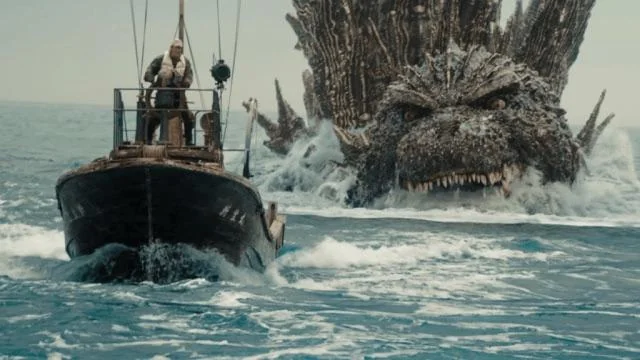
Koichi and his crew are tasked with delaying the creature’s progress toward Japan. In a thrilling scene that recalls Spielberg’s Jaws, the ship engages the kaiju. We’ve certainly seen Godzilla wade in water, even swim in water, improbably stand in the middle of the ocean but Godzilla Minus One is the first film to really sell Godzilla as a truly terrifying aquatic menace. This sequence with the 3/4 submerged Godzilla chasing after the tiny boat was instantly iconic. 

Godzilla’s proves invulnerable to both projectiles and mines. The crew only manages to do some damage to him when Koichi shoots a mine that had become lodged in Godzilla’s jaws, which blows away a big chunk of the monster’s face…before it immediately grows back. Regenerator G1 in action!  Koichi’s crew is only saved by the appeance of a battle ship which gets some hits on Godzilla before the creature destroys it with his heat ray.

Koichi’s ship manages to return to Tokyo and he finally opens up to Noriko about his wartime experience and his encounter with Godzilla. Under normal circumstances this kind of unburdening might have brought them closer together and allowed their relationship to blossom but the two will not have that opportunity because days later Godzilla comes ashore and attacks Ginza while Noriko is there working. She narrowly escapes the initial wave of the attack. Godzilla, enraged by tank fire unleashes his atomic breath, which is particularly destructive and A-bomb coded. Noriko is caught in the shockwave and, pushing Koichi to safety, she vanishes into the destruction. This attack is the Minus One of the title bringing Japan back into destruction and chaos.

Vowing revenge, Koichi joins a loosely organized coalition of ex-military groups plotting a counterattack against the kaiju. This group is led by Mizushima who concocts an elaborate plan to lure Godzilla to the ocean and attach a series of devices to him which will sink him into deep trench allowing water pressure to destroy him. Koichi commandeers a fighter jet and aims to fulfill his original kamikaze mission. He lures Godzilla to the trench where the ships attach the devices to him once he has exhausted his atomic breath on a decoy battleship.

Godzilla is submerged but then breaks free becoming injured from the decompression. He attempts to use his atomic breath but Koichi crashes his plane into Godzilla’s mouth, ejecting at the last minute. This injury destroys Godzilla’s head at the moment it was to have unleashed his heat ray which tears his body apart.

After the battle, Koichi reunites with Noriko who had been recovered from the Ginza attack seriously wounded. Notably, she is suffering from a mysterious black rash growing up her neck.

We end the movie with a chunk of Godzilla’s flesh regenerating in the ocean.

THE MONSTERS

This is one of a handful of solo outings for Godzilla and there are really only two distinct designs here. The proto-Godzilla known as the Odo Island Beast and the final irradiated version of the creature. My unpopular opinion is that I like the Odo Island Beast muuuch better. The concept of a pre-irradiated Godzilla is not new, Godzilla vs King Ghidorah features a dinosaur-like “Godzillasaurus,” also in a WWII-era setting. It is executed much better here, of course. The Odo Island beast also walks horizontally, recalling the Tri-Star Godzilla. This version is also very quick moving and animalistic compared to the more deliberate and stylized movements of the evolved Godzilla. It also has an oversized head which gives it a more Tyrannosaurus profile.
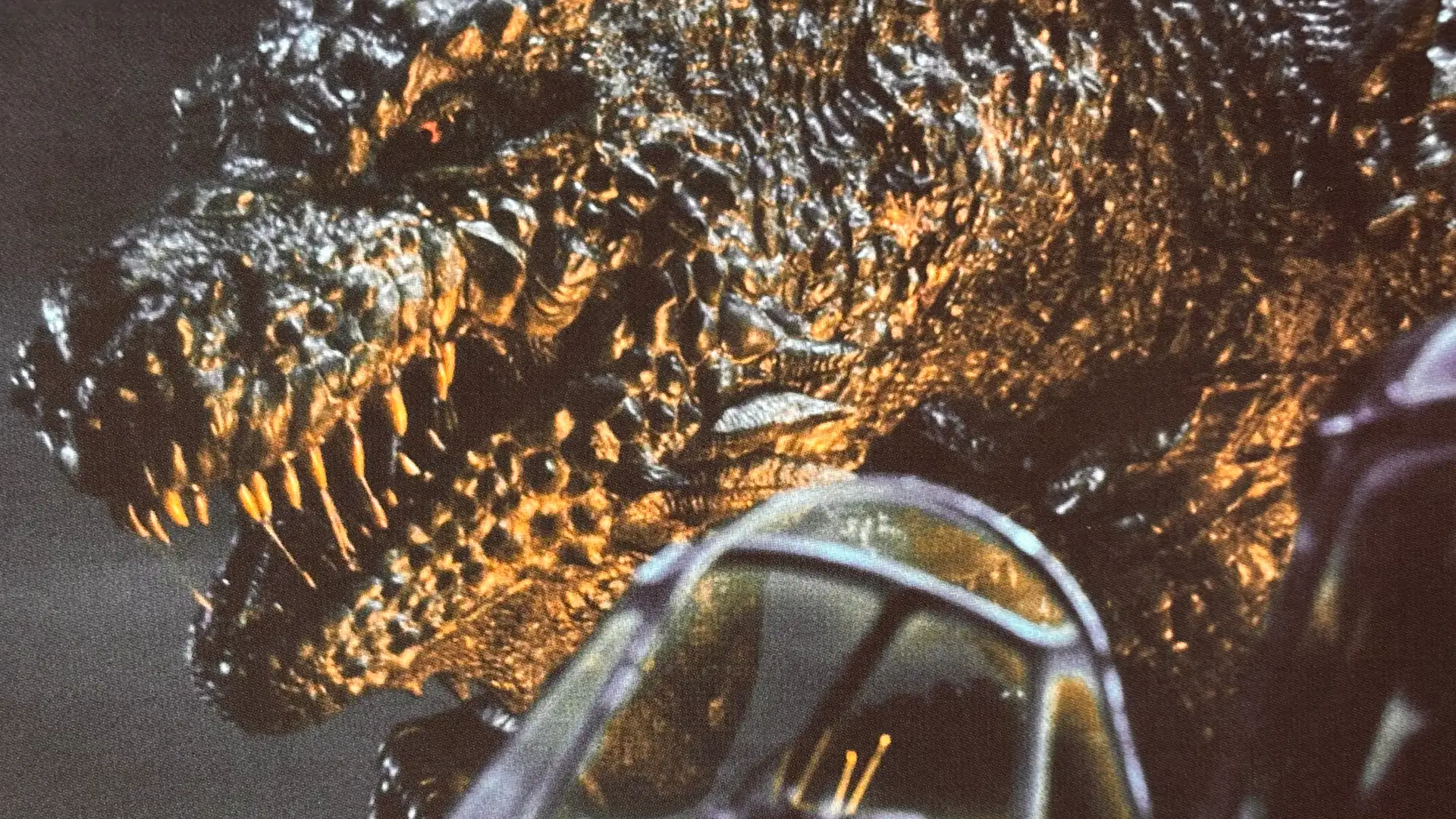
I may be in the minority here but I prefer a more dinosaur-like Godzilla. That he walks upright and drags his tail has always seemed weird to me. So this Odo Island beast was a real treat and it was also fun to enjoy a version of Godzilla in a smaller scale. The movie offers no explanation for this creature which is presumably some kind of surviving prehistoric animal.

The irradiated Godzilla is a fairly conservative iteration especially coming after the wild Shin Godzilla designs. He’s got some heavy Heisei elements and even some influences from the Monsterverse Godzilla. If you fed all the popular Godzilla designs into an AI and asked for a composite you would get something like this.

MOST MEMORABLE MOMENT

The initial ocean encounter with Godzilla. They could have kept him fully aquatic and it would have been an awesome movie.

WHERE TO WATCH 

Currently streaming on Netflix but the streaming landscape is extremely fluid and physical media is always your best bet for movies you love. Easily available on home video, along with its black and white edition, Godzilla Minus Color.

SEQUELS

Godzilla Minus Zero (2026)

SEE ALSO

Godzilla Mothra King Ghidorah: Giant Monsters All-Out Attack (2001)-Another candidate for best Godzilla movie of all time, Shusuke Kaneko’s mythic and majestic kaiju movie gave us one of the all time evil versions of the character and was an influence on this one.

Shin Godzilla (2016) Another excellent modern Godzilla movie. If Minus One hadn’t been so damn good we’d be talking more about this one.

Gamera 3: The Revenge of Iris (1999)-Another Shuske Kaneko movie and an influence on this one, particularly the excellent Shibuya attack sequence.

City of the Gods: The Return of Quetzalcoatl
If you are enjoying Monster Movie of the Week, check out my kaiju novel City of the Gods: The Return of Quetzalcoatl.
View on Amazon → 

Patrick Garone

Patrick Garone

Chicago-based writer & director. Author of City of the Gods and We Lowly Gods.
Saturday, September 26, 2026

REDUX Monster Movie of the Week: Gojira (1954)

Note this entry was originally published 10/3/2009 and revised and republished on 9/27/26.

GOJIRA* (1954)

Directed by: Ichiro Honda
Genre: Daikaiju eiga

THE MOVIE:

When you think of Showa Godzilla, chances are that you picture a big goofy looking rubber dinosaur grappling with a colorful and silly opponent. Unfortunately, most people’s conceptions of the King of the Monsters are rooted in the kid-friendly and badly-dubbed Technicolor movies of the late 60’s and early 70’s when the series had sunk irrevocably into camp. Because of this, most people are surprised by the tone of the original Japanese Gojira which is an urgent and somber meditation on the dangers of nuclear testing and scientific advancement. To a Japanese audience, only nine years after Hiroshima and Nagasaki this must have been powerful stuff.

However, not necessarily original stuff: Gojira was released only a year after The Beast from 20,000 Fathoms, an American movie which also featured a giant saurian creature woken by atomic testing which goes on a rampage through a major city but because of Japan’s legacy as the world’s sole atomic victim, there is an urgency and horror to the material in Japanese hands that’s not there in the American-produced Beast as though Gojira is the fevered nightmare of someone who experienced the aftermath of nuclear holocaust. This context is what makes Gojira more than just another radioactive monster movie and gives the film a richness and resonance that it wouldn’t otherwise have.


Another interesting element present in Gojira that is absent from the re-edited American version is a level of ambivalence about Japan’s relationship with America. It seems that the direct inspiration for the movie was a 1953 incident in which American nuclear weapons were tested in Japanese waters and the crew of a Japanese fishing boat became ill from radiation poisoning. This incident is actually directly referred to in the Japanese version of the movie but cut from the U.S. version to make it friendlier to American audiences. Thus, in the Japanese version of the movie, the blame for Godzilla is laid directly on America. There is a symbolic framework in place that makes Godzilla a symbol of U.S. (possibly and or Soviet) power in the world. In this sense, Gojira is a direct ideological ancestor of the 2006 South Korean film, The Host, another film that features a monstrous result of America’s policies in Asia. There is a long tradition of implicit or explicit US criticism in the series such as in Godzilla (1984), Shin Godzilla and Godzilla Minus Zero, this has sometimes resulted in those movies having America-friendly re-edits.

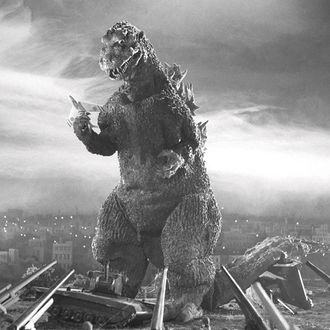
ShodaiGoji | Wikizilla, the kaiju encyclopedia

Another way to interpret the movie would be that Godzilla is visited on Japan as punishment for its aggression during the Second World War. Japan’s relationship with its wartime past is very complicated and they seem to feel simultaneously proud and guilty for their activities during World War II. In this interpretation Godzilla is a form of cinematic self-flagellation. This is explicitly the case in Godzilla Mothra King Ghidorah: Giant Monsters All-Out Attack. In Gojira, he is literally created by American nuclear testing. But the monster doesn’t go to LA or San Francisco to punish the Americans, he goes straight to Tokyo and completely destroys the city, leaving it as though a bomb were dropped on it. He punishes the Japanese. Over the years in Japanese cinema, Tokyo and other cities are destroyed over and over again. Why do the Japanese seem to enjoy seeing their cities destroyed so much? I wonder how these movies play in neighboring Asian countries that were Japanese occupied during the war. How do the Chinese feel seeing giant monsters destroying Japan? I mean, we have our big explosions and disaster movies as well but it is not as much a fetish for American moviemakers to show this level of meticulous urban destruction. In Godzilla, the Japanese are simultaneously punishing themselves and revisiting their nuclear victimization which is why Godzilla is so potent as a monster and a symbol.

THE MONSTER/EFFECTS:

undefined

Gojira pioneered the use of “suitmation,” what Toho Studio calls the combination of rubber suit acting combined with detailed miniature sets. It has since been a staple of Toho’s Godzilla series and one they kept up well into the digital age, only recently abandoning it for their mainline movies in 2016 (it is still actively used for the short festival films they put out on a regular basis.)


MONSTERS FEATURED:

This, along with Godzilla, (1984) and the American Godzilla (1998), Shin Godzilla, Godzilla Minus One are the only films in the series to feature Godzilla without another monster opponent.

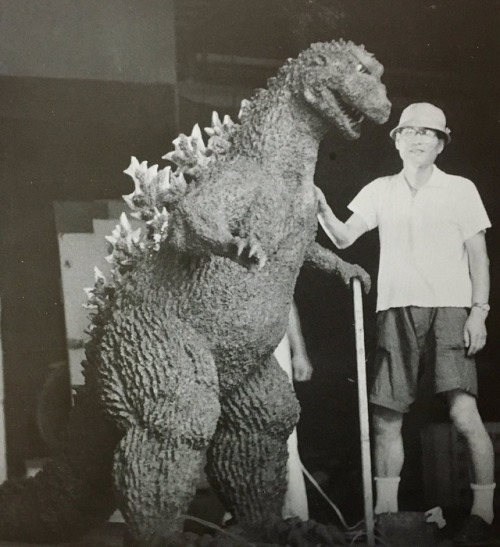
This "Shodai"Godzilla suit is really the template for the later Godzillas, which would later emphasize and de-emphasize different features. It established Godzilla as a chunky bipedal, (although tail-dragging) creature, with dorsal spines, dark, scarred skin, and atomic breath. This original version is little inconsistent in different shots where they were using a puppet but is notable for it's large eyes and mouth full of conical teeth including pronounced fangs which Godzilla has seldom had over the years. This one also gives him the stylized brows often featured in Asian folkloric art.

Since this is one of only two black and white Godzilla movies, there is some debate about what color this suit actually was. There were those connected with the movie who claim it was charcoal gray, which is the traditional Godzilla color. Others state that the suit was brown or even reddish. Most state that the suits mouth was painted bright red for contrast, which I am sure was hilarious.

MOST MEMORABLE SEQUENCE:

Godzilla’s chilling nocturnal rampage through Tokyo.

WHERE TO WATCH:

Although the American Godzilla: King of the Monsters has been available on DVD for years, the original Japanese version was unreleased in the U.S. until 2006 when the two disc set Gojira was released featuring both versions of the movie with some documentaries on Blu-ray.

As this writing it can be found on MAX (along with many of both the Legendary and Toto movies) and also on the Criterion streaming channel which is home to some of the more obscure entries of the series including Godzilla (1984), Godzilla vs Biollante  and the Rebirth of Mothra movies.

Streaming rights change quickly so if you love a movie your best bet is to buy physical media. 


SEQUELS:

There are currently about thirty-three movies in the Japanese Godzilla series. This one was immediately followed by:

Godzilla Raids Again (1955), King Kong Vs, Godzilla (1962) and Godzilla Vs. Mothra (1964.)


SEE ALSO:

The Beast from 20,000 Fathoms (1953) - A direct influence on Gojira  released the year before.
Godzilla Vs. King Ghidorah (1991) - Through an insane time-travel plot deals with the wartime origins of Godzilla and Japan's complicated feelings about the West.
Godzilla, Mothra, King Ghidorah: Giant Monsters All Out Attack (2001) - Examines Godzilla's sometimes tortured relationship with Japan itself.
The Host (2006) - The US, making' monsters in Asia, Korea edition.
Shin Godzilla (2016) -A very on-the-ground response to Godzilla coming ashore movie. This one feels a bit like the original in that it is treated as an unprecedented event and taken very seriously. This Godzilla is more informed by the then-recent Fukushima radioactive accident.
Godzilla Minus One (2023): Recaptures both the urgency and the post-war time period of the original movie.

THE TRAILER:


TRIVIA:

Godzilla was originally to be realized as a stop-motion creature like the ’33 King Kong or the Rhedosaurus from The Beast from 20,000 Fathoms but Toho Studios lacked the budget and expertise to do this so they opted to go the rubber suit method. Can you imagine how cool a stop motion Godzilla would have been?

*In Japanese, “zee” actually sounds more like “dzjee” so “Gojira” actually becomes “Godzjeera” hence the anglicized Godzilla.
City of the Gods: The Return of Quetzalcoatl
If you are enjoying Monster Movie of the Week, check out my kaiju novel City of the Gods: The Return of Quetzalcoatl, the story of a UFO that appears over Mexico City and the gigantic Mesoamerican god who rises from the sea to confront it and the creatures in its thrall.
View on Amazon →
Patrick Garone

Patrick Garone

Chicago-based writer & director. Author of City of the Gods and We Lowly Gods.
Sunday, September 20, 2026

Monster Movie of the Week: Godzilla vs Kong (2021)

Godzilla vs. Kong (2021) - IMDb

Note: This column went on a long hiatus in 2017 and believe it or not, this is the first 2020's movie I am covering for Monster Movie of the Week. I didn't stop watching them, I just stopped writing about them. Looks for more representation of our current decade here on the column.

​Legendary’s Monsterverse really hits its stride in Godzilla vs Kong the first movie in a loose trilogy of team-up flicks featuring the iconic movie monsters. This is their first movie together since 1962’s Toho feature King Kong vs Godzilla which paired them for the first time. This movie was released on MAX as a high profile COVID release while the theaters were still closed and was a big hit by whatever metrics the studio used. I remember watching it the day it started streaming and it was a little blip of pop culture joy during a pretty bleak time. 

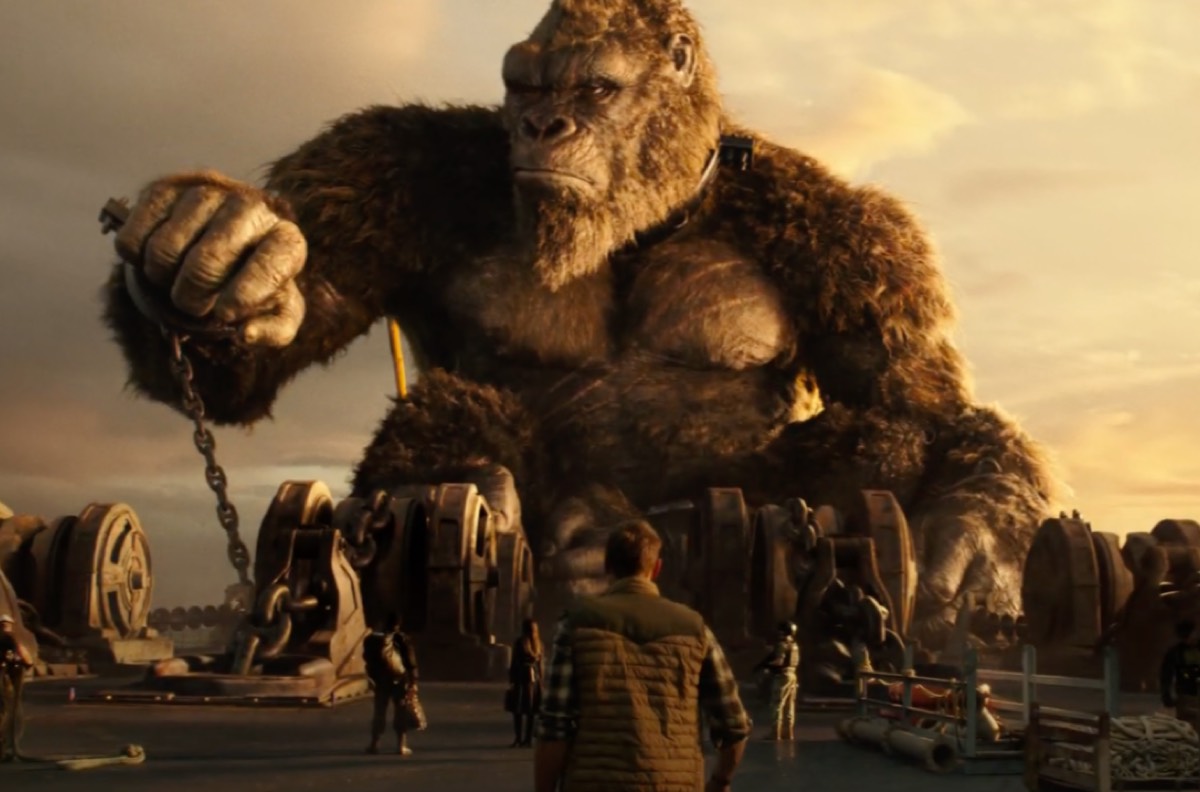
This movie and its follow-up Godzilla X Kong: The New Empire were directed by Adam Wingard. Tonally, it is much closer to Kong: Skull Island than either of the darker Godzilla movies and that (and its focus on Kong) might be a disappointment for Godzilla fans but there is a lot to love here. Wingard  brings a lightness and sense of joy to the movies and its battles, which are often surprising colorful, inventive and full of very cool little character moments. This is a movie that absolutely delivers on its promise of a fun monster romp, delivering some really awesome and beautiful action. Godzilla vs Kong is one of those movies I could always just pop in and enjoy. Wingard has a knack for getting good performances out of these giant CGI characters. He builds Kong up into a genuine character and a rough-and-ready action hero with a satisfying arc in this and the next movie. Sadly, Godzilla doesn’t get the same level of attention but he’s also a character that should remain a bit mysterious. He can’t or shouldn’t be humanized in the same way that they have historically been able to with Kong.

The film takes the Hollow Earth concept introduced in Skull Island and really runs with it, introducing us to a surreal landscape filled with Titans and other creatures and the remnants of a past ape civilization. Hollow Earth and the related Axis Mundi realm become a big staple of the Monsterverse.

The story picks up several years after King of the Monsters and about fifty years after Skull Island. Kong has grown to nearly his full size and has largely outgrown his confines on Skull Island. Monarch scientist Ilene Andrews is managing the Kong facility. She is joined by her adopted daughter, Jia, who is the only surviving member of the Skull Island tribe who had recently been wiped out in a storm. Gia has a special bond with Kong.

Godzilla vs. Kong review: Kaiju greatness that lives up to its absurd title  - Ars Technica

On the other side of the world we have Madison Russell, returning from King of the Monsters. She is trying to make sense of Godzilla’s attacks on Apex corporation facilites. She listens to the conspiracy podcast of Bernie Hayes (the always wonderful Brian Tyree Henry, even with very little to work with here) they team up to investigate what Apex is up to, ending up in Hong Kong.

Dr Andrews in coordination with Apex and Hollow Earth expert Dr. Lind, lead an expedition to transport Kong to an entry point to the Hollow Earth where they speculate his species is from. The problem is that removing Kong from Skull island antagonizes Godzilla who established himself as the alpha Titan when he defeated Ghidorah at the end of KOTM. Godzilla intercepts them and the two get into an awesome brawl in the middle of the ocean that involves them tangling underwater, and Kong leaping from aircraft carrier to destroyer and throwing fighter jets like shuriken. The two treat these ships like canoes in this extended action sequence. It is one of Godzilla's finest fights. 

Godzilla vs. Kong,” Reviewed: A Monster Mush of Two Venerable Franchises | The New Yorker

They manage to drive Godzilla off and make it to Antarctica where Kong and the crew go through a portal and end up in Hollow Earth which looks a lot like a Prog Rock album cover with mountains hanging from the sky and floating crystals.

The expedition traverses this landscape and end up in what appears to be an abandoned ape lair complete with wall art and an axe fashioned from one of Godzilla’s dorsal spikes, and a throne. This intriguing concept is left for exploration in the next movie The Apex people then reveal they are there to steal the Hollow Earth crystals to power a special project.

Madison and Bernie arrive at the Apex facility in Hong Kong and discover that the company is keeping Titans, in this case, Skull Crawlers from Skull Island. Not only that they have created their own mechanical Godzilla, the Legendary universe’s version of Mechagodzilla. 

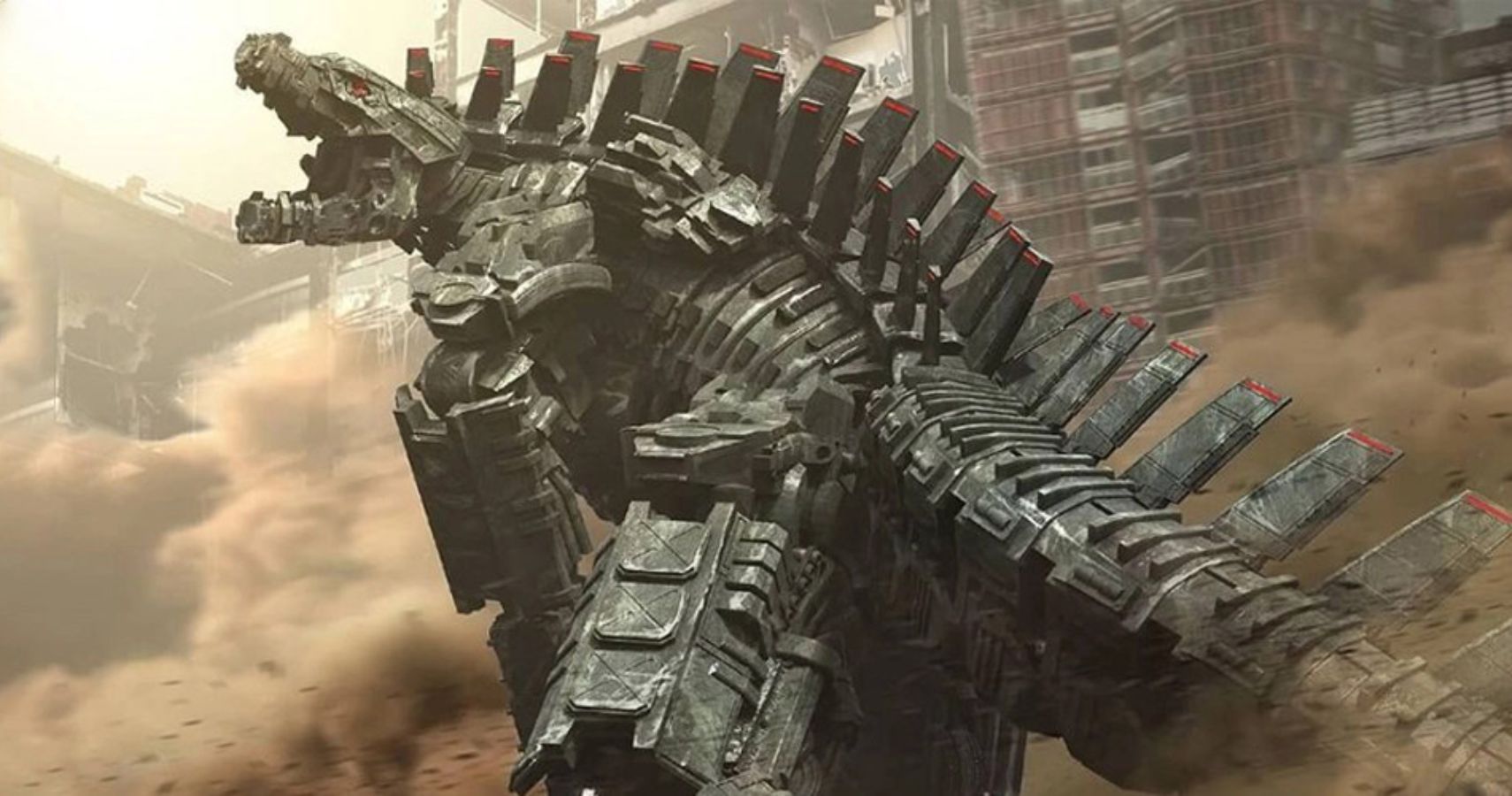
Godzilla vs. Kong Director Explains Mechagodzilla's Consciousness

Obviously, Mechagodzilla has a long a storied tradition in the Toho movies, first as a robotic alien doppleganger in the Showa era. In the Heisei and Millenium Era Mechagodzilla was a man-made robot/mech designed to protect against Godzilla, as is the case here. This particular iteration is controlled using a device built around one of the skulls of the defeated King Ghidorah, which apparently has the ability to amplify the pilot’s connection to the mech, which recalls the Kiryu version’s use of Godzilla’s skeleton in its body. In both cases, a dead Kaiju’s bones are used in the operation of Mechagodzilla with disastrous results.

Godzilla arrives in Hong Kong drawn by Mechagodzilla’s presence. Kong and the team manage to escape the Apex agents and exit through a hole Godzilla burns through the ground, which Kong ascends.

Look closely and you might even see bicycles stuck to Kong during the Hong  Kong fight - befores & afters

Kong and Godzilla fight in the very photogenic city which was also the setting for the climactic battle in Pacific Rim. This is another really well-choreographed fight where Kong makes good use of his agility and his new axe, but is ultimately defeated by Godzilla and left for dead. Godzilla then moves on to the now out-of-control Mechagodzilla who is more than a match for him. Indeed, this version of Mechagodzilla is so fearsome that he would have defeated Godzilla without help.

That help comes in the form of Kong who has been resuscitated by one of the EMP vehicles used to travel into the Hollow Earth. He saves Godzilla and the two defeat the rampaging robotic Titan, leaving Kong and Godzilla in an uneasy peace with Kong ruling Hollow Earth and Godzilla, the surface.

THE MONSTERS

Godzilla and Kong are both slightly redesigned from their previous appearances. Kong has been scaled up in order to better tangle with Godzilla and is generally bigger, rougher and tougher.

I am not a fan of this Mechagodzilla design which is very industrial and inelegant, even compared to the original Mechagodzilla. He also carries over some of the Legendary Godzilla ungainly proportions which I have never fully loved. Certainly it is a step down from Kiryu, the Millennium Mechagodzilla. We also don't get much development of the Mechagodzilla concept. The movie sets up the intriguing idea that he is operated using Ghidorah's skull but we never explore what that means. We also never get to know Serizawa, presumably the son of a major character featured in the previous two Godzilla movies. We spent a lot of time with that character who gave his life to restore Godzilla so that he could defeat Ghidorah so it would be nice to explore what it means that his son is piloting Mechagodzilla.

In addition to the Skull Crawlers we also see some of the fauna of Hollow Earth, including some very cool flying serpent creatures, some crabs, giant cave bats, and fan-favorite Titan, Doug.

MOST MEMORABLE MOMENT

How is it that they managed to give us the greatest kaiju fight ever set in Hong Kong when Pacific Rim is, like, a thing in the world? Godzilla and Kong fighting in night time Hong Kong among the futuristic neon skyscrapers is just awesome to behold as are all the cool little character details like Godzilla descending on Kong on all fours like a damn crocodile or Kong popping his dislocated shoulder back in a la Lethal Weapon. Chef's kiss.

WHERE TO WATCH

Strangely no longer on HBO Max as of this writing. You gotta buy that physical media folks! I'm telling you...

SEQUELS

Followed by the equally fun Godzilla X Kong: The New Empire (2024)  and Godzilla X Kong: Supernova (2027)

TRAILER


City of the Gods: The Return of Quetzalcoatl
If you are enjoying Monster Movie of the Week, check out my kaiju novel City of the Gods: The Return of Quetzalcoatl, the story of a UFO that appears over Mexico City and the gigantic Mesoamerican god who rises from the sea to confront it and the creatures in its thrall.
View on Amazon →
Patrick Garone

Patrick Garone

Chicago-based writer & director. Author of City of the Gods and We Lowly Gods.
check out my kaiju novel City of the Gods: The Return of Quetzalcoatl. View on Amazon →

Monday, March 30, 2026

Monster Movie of the Week: Godzilla: King of the Monsters (2019) 100th Monster Movie of the Week!!


​A direct sequel to Gareth Edward’s Godzilla, King of the Monsters is an epic third entry to the then-new Monsterverse, bringing in a trio of classic Toho monsters to join the titular Titan which is what fans wanted instead of the rather generic MUTOs from the first movie. 


Michael Dougherty directs here and the tone is consistent with the epic and more serious vibe of the fist movie, although with more humor shoehorned in which I don’t think works that well. This is in contrast to the Monsterverse entry that preceded it, Kong Skull Island, which was a more lighthearted movie and the humor was much more organic.


On the visual side, I will say that this might be the most beautifully-shot Kaiju movie I have ever seen. There are about a half dozen or so really iconic shots in this movie and generally an approach that is almost painterly in the way shots are composed and the use of light, color, and texture. This is gorgeous movie full of beautiful monsters, and on that level is is an amazing film in the genre.


The human characters, however, leave much to be desired. Generally, a good rule for human characters in Kaiju movies is to avoid being obtrusive. There are a handful of characters in this movie who are just flat-out grating none more so than Vera Farmiga’s character. I love me some Vera Farmiga, she was great in Bates Motel and The Conjuring movies but here they have her playing a character who decides she wants to use a kaiju-signaling device to awaken all of the sleeping Titans to “cleanse the Earth” or some nonsense and there is just an air of dumbness around this whole subplot that bogs the movie down. What’s worse, she’s not even fully committed to the plan and struggles with it throughout the movie. 


Kyle Chandler (who previously appeared in Peter Jackson’s King Kong) plays her ex-husband and seems like he also doesn’t seem to be fully in the movie. His character is reluctantly dragged into the events of the story and seems to be only grudgingly in the movie. Bradley Whitford plays a wise-cracking Monarch agent, whose schtick goes tiresome after a few scenes. The great Ken Wanatabe returns from Godzilla seemingly to provide Japanese street cred and to occasionally say “Go-jira.”

THE MONSTERS


Okay, we’ve established that the human characters are pretty terrible and annoying in this movie, however, the monsters are exquisite. Godzilla is fairly unchanged for better or worse from his eponymous movie, although we do learn a bit more about him here such as the fact that he’s his own fricking Batcave in the ruins of an underwater Atlantean city. This movie also establishes that his species has been around since the dawn of history or before and are intertwined with ancient humanity. We do also see the Monsterverse version of Burning Godzilla, the meltdown version of the monster before his death in Godzilla vs. Destoroyah although here it is a temporary state and they don't take the opportunity to kill him off or reboot his design.


The movie also introduces us to the Monsterverse version of Mothra, here reimagined as essentially every insect with traits of butterflies, wasps, and mantises. Although she looks good I do think she’s a little over-designed to make her look deadly. Part of the appeal of Motha was that she is deadly while also looking cute and harmless.  She’s always been able to hold her own despite looking like a plush butterfly. 


Rodan also makes his American movie debut, here climbing out of a Mexican volcano, ironic since the original Rodan met his demise in volcano. This version of the character is a nice update of the original design, with perhaps some more gnarly avian features. He also seems to be perpetually burning, giving cool “firebird” vibes. True to form, he is incredibly destructive, leaving hurricane winds in his wake which literally pull people and cars into the sky.


The real star of this movie, however, is King Ghidorah who I will just go on record as saying has never looked better than he does in this movie. This is a beautiful character design and execution. This version of the character is notable for having larger-than-normal wings which give him a majestic appearance and very long, serpentine necks. He is recognizably Ghidorah but instead of the very awkward and vertical orientation the character had in is suitmation days, this version is more animalistic and crawls on its wings like a pterodactyl, long necks undulating before it. I also love the interactions of the heads, with the central one being the most dominant and the right head being a little derpy, the source of the famous meme template.


This is the first time the character has appeared in a big-budget Hollywood movie and it is quite a big deal. This character is one of the most frequently appearing kaiju in the long-running Godzilla series, having made his first appearance in 1965’s Ghidorah, the Three-Headed Monster. He has the distinction of being the titular monster in not one but two Godzilla movies (Invasion of the Astro-Monster is the other), although Ghidorah has never had a solo movie like Mothra, Rodan, and Varan. That said, the golden space dragon was all over the Showa movies and is essentially Godzilla’s arch nemesis. So his appearance in King of the Monsters is as big as the first movie appearance of the Joker in the 1989 Batman movie. So I am very happy the movie did him justice. 

MOST MEMORABLE MOMENT 

Ghidorah’s emergence from the Antarctic ice and we first see a weird collection of legs and tails and we don't really even know what we are looking at. Love that shot.

TRAILER


Patrick Garone

Patrick Garone

Chicago-based writer & director. Author of City of the Gods and We Lowly Gods.

Friday, March 20, 2026

Monster Movie of the Week: Kong Skull Island (2017)

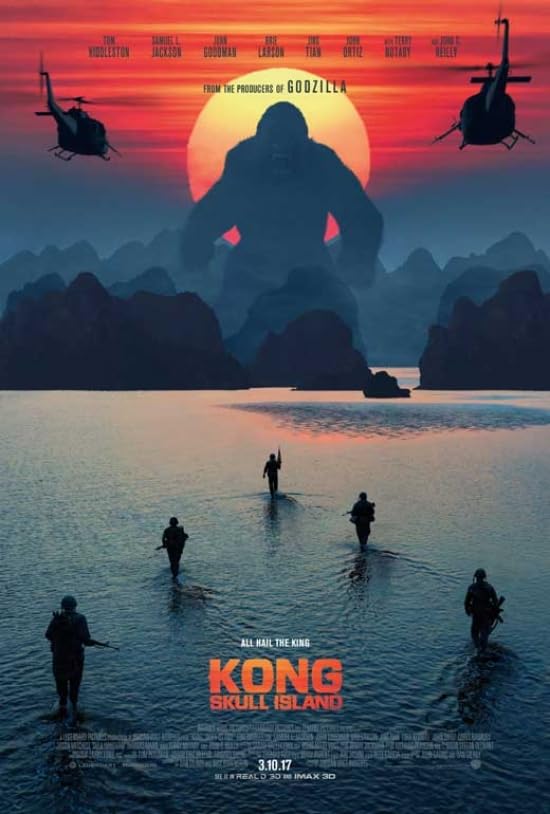
Amazon.com: Kong Skull Island Movie Poster (27 x 40 ...

Directed by: Jordan Voght-Roberts

Genre: Kaiju/Jungle Adventure/War

THE MOVIE:

Gareth Edward's 2016 Godzilla movie launched a new shared universe, the Monsterverse which is still going strong with multiple movies, television shows, and ancillary media. The first follow-up to Godzilla is a prequel set in 1973 during the Vietnam War era and is a fun genre mash-up that mixes kaiju action, the King Kong mythos, and Vietnam war movie flavor. Thankfully, this movie wisely avoids retreading the classic story which was done so lovingly in Peter Jackson’s 2005 movie. 

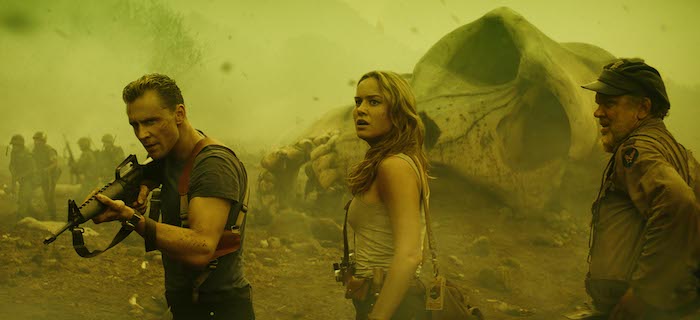
Although this movie is in no way a remake of any past movies, there are some echoes of the classic Kong stories. Like the previous films, Skull Island features an expedition to the titular location, although here on an expedition for the Monarch organization introduced in Godzilla. As always, there is a blond woman, here played by Brie Larson who like her predecessors forms a (in this case, brief) connection to Kong. There is a dashing leading man, played by Tom Hiddleston, in full action hero mode. Sam Jackson plays a military commander who forms and instant grudge against Kong and is one of the few actors I can think of who can both believably stare down a 100 foot ape and shut down a self-righteous monologue with a well-placed “Bitch, please.” I do think this is one of Jackson’s most iconic and fun performances. Also, a fun game in this movie is counting the other MCU actors which includes some more obscure ones like John C. Reilly and Eugene Cordero.


Kong: Skull Island (2017), my thoughts | Film Music Central


Skull Island also does a lot to flesh out the world of the Monsterverse, centering on John Goodman’s character, Bill Randa, who is in some ways is fulfilling the Carl Denham role as the morally ambiguous figure who sets the whole voyage in motion here in service of Monarch. Randa is also a major character in Monarch: Legacy of Monsters, which features him in the decades prior to Skull Island and the early years of the organization. Kong: Skull Island also eases us into the concept of the Hollow Earth which is a major plot point in the subsequent movies. This theory is alluded to by Corey Hawkins character, who also appears decades later in 2019’s Godzilla: King of the Monsters.

This movie introduces audiences to a new, bigger Kong and sets the giant primate up to go on new adventures. The Monsterverse does a wonderful job with Kong over the course of the series making him a compelling character in his own right with a satisfying arc that finally frees him from his tragic story.

However, the greatest legacy of this movie is adding a much needed element of fun to the Monsterverse after the somewhat glum and serious Godzilla. Skull Island and the subsequent Kong/Godzilla team-up movies are really notable for their often unexpected and quirky tones, bold, inventive action and visuals and excellent characterization of Kong and some of the other creatures and that really starts with Jordan Voght-Roberts’ direction here and is built up in the subsequent movies. 

THE MONSTERS/EFFECTS:

This design is much more upright and less Gorilla-like than he was in Jackson’s version. Kong here is not at his full adult size yet but the movie clearly scales him up prepping for his planned fight against Godzilla, which doesn’t happen for another fifty years in the movie continuity. Certainly he is much bigger than he has been in American media. Remember, classic Kong is only about 25 feet tall and about twice the size of the largest apes to have lived. That is barely up to Godzilla's cankle and hardly makes for an interesting match up so to play in Godzilla's sandbox he's always had to be scaled up significantly (classic Toho Kong is a little bigger than he is depicted in this movie.)


Kong: Skull Island - Wikipedia


Skull Island, as always, is full of creatures. While there is not the fully realized prehistoric ecosystem of the 2005 Peter Jackson movie, there are a handful of memorable creatures here including some Pterodactyls, a giant yak, an overgrown octopus (seemingly a Toho throwback), and a creepy giant stilt-legged bug, that is the source of a memorable horror scene. There are some other creatures native to Skull Island which we see later in the franchise in Monarch season 2.


Review: 'Kong: Skull Island' Crosses a 1933 Classic With 'Apocalypse Now' -  The New York Times


Instead of the usual dinosaurs, this Kong's natural rivals are two-limbed reptilian creatures which Reilly's character self-consciously dubs, Skull Crawlers. One of Kong's main roles in the Skull Island eco-system is to control the population of these creatures. These monsters have a unique design with a weird two-legged walk. Their heads are covered with a bony exo-skull, hence their name. They have a maw filled with teeth and their prehensile tongues. The final boss is the giant Skull Devil which emerges from underground, possibly straight from Hollow Earth from where these creatures originate. Kong fights the Skull Devil at the end of the movie, here beginning his habit in the Monsterverse of wielding a variety of tools (boat propellers, Godzilla Spine Axes, Power Gloves, children) to defeat his enemies.

MOST MEMORABLE MOMENT: 

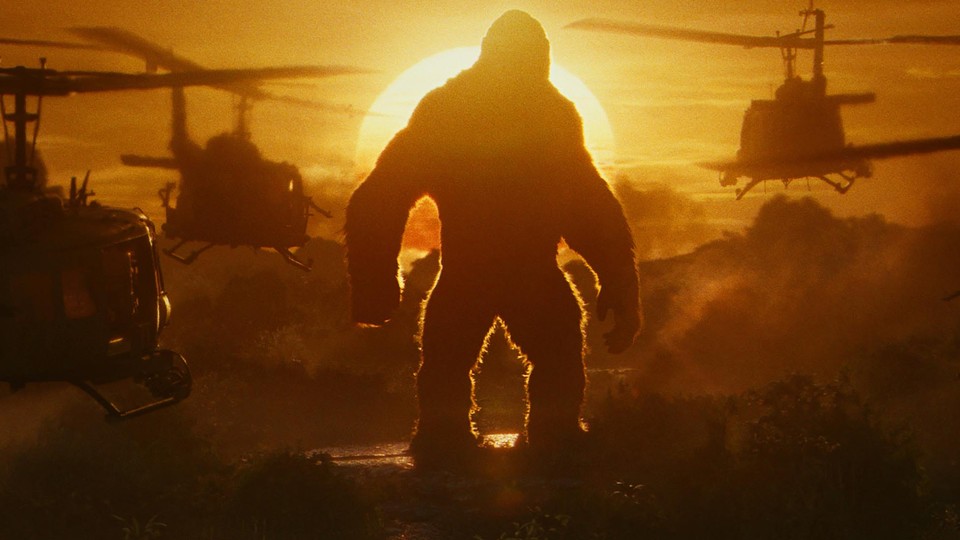
Our first encounter with Kong, as the helicopters descend on the island Apocalypse Now-style, complete with requisite Classic Rock soundtrack only to have one of them fall prey to a giant tree trunk thrown like a spear and we suddenly go from one genre movie into a completely different one.

SEQUELS:

Followed by Godzilla: King of the Monsters (2019), Godzilla vs. Kong (2021), Godzilla X Kong: The New Empire (2024) and Godzilla X Kong: Supernova (2027)

The Apple TV series Monarch Legacy of Monsters (2023-) goes into the backstory of Bill Randa and the origins of Monarch. An animated series Skull Island also is set fully on the titular island twenty years after the events Kong: Skull Island.

SEE ALSO

Primitive War (2025) One of the few movies that has the same genre profile as Kong: Skull Island this is another Vietnam era monster movie only in this case a squad of soldiers finds themselves in an inexplicably dinosaur-jungle. Filled with fantastic dinosaurs and over-the-top action and gore.


Patrick Garone

Patrick Garone

Patrick Garone

Chicago-based writer & director. Author of City of the Gods and We Lowly Gods.