Showing posts with label We Lowly Gods. Show all posts
Showing posts with label We Lowly Gods. Show all posts
Tuesday, September 1, 2026
Saturday, August 15, 2026
A Lost Story from the Universe of We Lowly Gods: The Tale of the Benefactor

THE TALE OF THE BENEFACTOR
By Patrick Garone
The old beggar cursed and jabbed at the fire with his cane and it hissed and spat at him in response. The boy reconsidered his decision to seek shelter with the man. He glanced at the cave entrance and saw rain falling from the heavens in gleaming, solid sheets of water, which refracted the cold and murky landscape beyond.
At least the fire held back the cool dampness. It felt good on his skin. His soaked tunic was starting to dry at last.
Thunder boomed.
“Is this your cave,” the boy asked.
The old man said grimly: “No. I am seeking shelter from the storm.”
“Oh,” the boy said, at a loss.
“My home is on Krete. I make my way there.”
The boy did not know where Krete was exactly, only that it was a big island to the south.
“Krete is far,” the boy said finally. “Why are you on Lemnos?”
“Family,” the old man said without further explanation, gazing out at the wet landscape beyond.
The boy nodded, absently.
“The mountains on this island are sacred and were once gods,” declared the old man, still staring out at the wet landscape..
“The gods turned to mountains,” the boy asked with skepticism.
“Only those Kronos has deemed to have committed grave offenses against the Titans, in this case the great Prometios, although many others have fallen afoul of the Lord of Heaven.”
The boy detected some bitterness in the beggar’s voice.
“Ah, for Prometios gave fire to mankind,” the boy ventured, waving a hand to the fire between them, “and this was an offense to the gods.” He had learned as much from the village priests.
The old man huffed. “The Titans accused Prometios of many transgressions. Giving fire to mortals was only a small part of it.”
“Are you a priest of Prometios that you know so much? Or a poet?”
“I am merely an old man who has learned much throughout my many years of life, which I fear may soon come to its long-delayed conclusion.”
The boy acknowledged this with disinterest. To be so old as to be at the end of one’s life was inconceivable to him. Old age was a vaguely embarrassing state, presumably born out of poor choices. It would never happen to him.
Lightning flashed.
“I would hear of Prometios, if only to pass the time,” the boy declared, “since I live on this island, which was beloved of the Titan and where you say his remains lie.”
The boy knew that old men loved to tell stories. They practically bled them from their bald heads.
The beggar regarded him over the fire. “I am losing myself. Before long, there will be nothing left."
"You must have stories to tell. Why not share one before it leaves you?"
The old man regarded him for a moment. There was a gleam in his eye. Or perhaps it was just the fire. "Yes. I will give you a story while I still possess it.”
Thunder boomed.
He looked out beyond the cave entrance; the outside world warped through water. “I will speak until the rain ceases to fall.”
The old beggar shifted his body and leaned toward the boy and into the fire so that its light animated his ancient, weathered face.
***
After the overthrow of the All-Father, the Titans began their reign, taking over his old palace and ruling from his heavenly citadel. At that time, only the Children of Gaia populated earth. There were thinking Chimerics-like the nymphs, cyclopes and centaurs-who combined the features of the Titans with animals. These Chimerics were among Gaia’s first fevered creations.
There were also colossal beasts and monsters born in the early dalliances between Gaia and Ouranos. These creatures were aggressive and ungovernable, and they preyed upon their smaller, weaker kin. In order to defend their Chimeric siblings and to ensure future use of the earth realm, the Titans made war on their monstrous brethren in a legendary war. At the end, the Titans were victorious, killing or driving the beasts to the ends of the earth. So violent and destructive were their battles that they shaped the very land, creating the legendary Mediterranean and the islands that would later become Greece.
In return for protecting them, the Titans tasked the Chimerics with maintaining this new world, tending to its flora and fauna. The creatures were happy to do this since they were no longer subject to the predations of their monstrous siblings. This was the Titans’ first act of creating order in the world.
Gaia was, of course, displeased by the conflict between her children, but at least happy there would now be peace. She had grown old, and with each of her creations she had given up something until she was nearly spent. She was barely more than spirit by this point. However, she was not finished creating life. With her grandson, the Titan Prometios, she planned for her ultimate creation.
“Grandmother,” he beseeched her, “do you really mean to do this thing?”
“I must create them,” she said, “even if it means my end.”
With that, she brought forth iron and metals from deep within her. She raised easily edible plants and docile animals and teeming fish in the realm of Oceanos, lord of the seas. But these acts were nothing to her but preparations for her last act, for she knew her newest creation would have neither sharp teeth nor claws to survive in the world. With the last of her strength, the great creator Gaia brought forth her ultimate work: man.
“Promise me, my child,” she begged of Prometios with the last of her strength, that you will protect them."
“I will, Grandmother,” the Titan said, weeping.
He regarded this new life: dozens of tiny and weak creatures. Those newly created human beings were as men and women fused together in one shambling, two-headed body with an indeterminate number of limbs. Indeed, these new human beings were next to helpless.
Prometios sighed. Unfortunately, this was the way of many of Gaia’s creations. For every powerful and beautiful Titan, there were dozens of misshapen Chimerics and other more pitiful creatures. He turned himself to realizing Gaia’s ambitions.
One by one he worked on them, making them better and stronger. First, he split them apart. He imposed gender on them, male and female, in the manner of the Titans themselves. He stoked the fire of love and passion in them. This ensured that they would seek one another out to couple and increase their numbers in this new paradise. But Prometios split them artfully, so that in none was a perfect split between male and female and in each some of the opposite existed so that there might be a healthy dynamism and disruption to the otherwise rigid social order that he bestowed upon them and that they might be capable of some of the pleasure and freedom of the Titans.
On this very island, he hid and raised humanity up. He taught them speech. He taught them hunting, farming, and building. In turn, they loved and worshipped him.
Their adoration was intoxicating and nourishing. He knew this would be mankind’s salvation. Gaia had created beings whose existence was completely symbiotic with the Titans. And, yes, he introduced them to fire. And it was fire which drew the remaining Titans to him, for they had been searching the world for him, blaming him for the death of their mother. Shocked by humanity, it was only the pleas of Prometios which stayed the great scythe of Kronos from wiping them all out immediately.
They chained Prometios and brought him before his family in the great hall of the heavenly citadel. Kronos and Rhea looked down upon him from their thrones. He saw familiar faces in the crowd of Titans and their children, such as Crios, lord of the underworld, and his father, Iapetos, spinner of fates.
“Prometios,” Kronos began, his voice boomed in the open hall.
“You stand accused of unimaginable crimes, firstly the murder of our mother, Gaia, the Lady of Creation.”
“l’m guilty of nothing of the sort,” Prometios responded. “It’s a foolish accusation, Uncle.”
Kronos bristled, perhaps regretting giving the famously clever Titan a forum.
“We all knew Gaia. We knew her obsessions. I’m guilty of only lacking persuasion. I loved her dearly, and I was closer to her than any, save perhaps good Crios."
“This is true,” Crios added, for his realm was literally created from the bones of Gaia's body, long discarded.
Kronos frowned.
“So you allowed my mother to destroy herself before your very eyes, for what? These miserable creatures?”
“Those ‘miserable creatures’ are the last children of Gaia,” Prometios said.
“We are her children too,” Kronos countered. “And, as always, she favored her misshapen beasts and monsters to us, her greatest creations.”
“What’s stopping us,” Rhea asked, her crown blooming with flowers, “from destroying them outright?”
“They are a mockery, chattering animals made in our image,” Kronos added, “surely you must have known we would not tolerate them, you who thinks of everything.”
“You won’t destroy them,” Prometios countered, risking a smirk. “I think you will find them...valuable.”
Kronos and his queen took their leave of Prometios and ventured to their garden paradise, to this very island but to the men many years had passed, for time in heaven is rarefied compared to time on earth.
In the years of his absence, men had taken the teachings of Prometios to heart and built great works, cities and culture. They had even built houses of worship to their Titan benefactor. Kronos and Rhea came upon one of these human cities, a pair of glorious giants and men fell at their feet in worship and adoration, knowing them to be of a kind with their lost lord.
Kronos and Rhea then discovered what clever Prometios had already known. For whatever power and greatness they possessed before that moment, they had not known what it was to be a god, for a god requires lesser beings to provide worship. This was the wisdom of Gaia and Prometios that the love of human beings would forever change and define their kind. Indeed, it was the promise kept by good Prometios which changed the very world. Men multiplied and filled in the lands which the Titans had cleared of monsters and spread their worship of the gods to the furthest corners of the map.
“What is it about them,” Kronos would later ask his nephew.
“They are spirit and flesh,” Prometios replied. “Gaia made them to love us. And we cannot resist them. They can build temples and create religions around this love, but it is as simple as that. It’s a kind of lust or obsession which sustains us.”
For his trouble, however, Kronos imprisoned Prometios. The Lord of Heaven was eternally fearful of his power being stolen from him. And in truth, the clever Titan did little to ingratiate himself to his lord. Poor Prometios endured unimaginable torture for the alleged crime of matricide. But his “crimes” didn’t stop the Titans from taking advantage of the systems he created. From that point on, the Titans actively cultivated mankind and their worship. If the world was their garden, human beings were the exotic flora whose nectar sustained them. They could help themselves no more than bees could resist flowers.
Some of his most devoted mortal followers eventually located him, worshipping him in a secret singular cult. This worship was unique and more intense than the the other forms of god worship. Indeed, the bleeding, suffering god who had sacrificed himself for mankind had instilled a fervor not present in the adoration of the other Titans. It spoke to a great need in humankind that has yet been unmet.
Ultimately, man's worship was not enough to sustain him and Prometios' great body turned to stone, the very mountain spine of this island.
***
Inside the cave, the fire smoldered. Outside, the rain was slowing to a drizzle. The old man stood, his knobby knees prominent under his traveling robes.
“With that,” he said, ”I leave you. I must head to Krete while I still remember myself.”
“Wait,” the boy asked, “are you...a god?”
“I was never properly a god, never worshipped by man, but I was there at the beginning and saw it all before being cursed to this.”
“Ouranos,” the boy whispered
The old man sighed wearily.
“But how can you die,” the boy asked, deeply disturbed by the idea.
“No one is immortal. Neither gods nor young boys, although both mistakenly think they are.”
The boy looked on as Ouranos walked off to his fate.
Patrick Garone 2026
"The Tale of the Benefactor" is set in the universe of and is a de-facto prequel to my novel We Lowly Gods, which tells the story of the Chimerics at the end of the Greek era.!-- START PATRICK GARONE HORIZONTAL POST FOOTER -->

Patrick Garone
Chicago-based writer & director. Author of City of the Gods and We Lowly Gods.
Monday, April 13, 2026
The Ancient Origins of We Lowly Gods
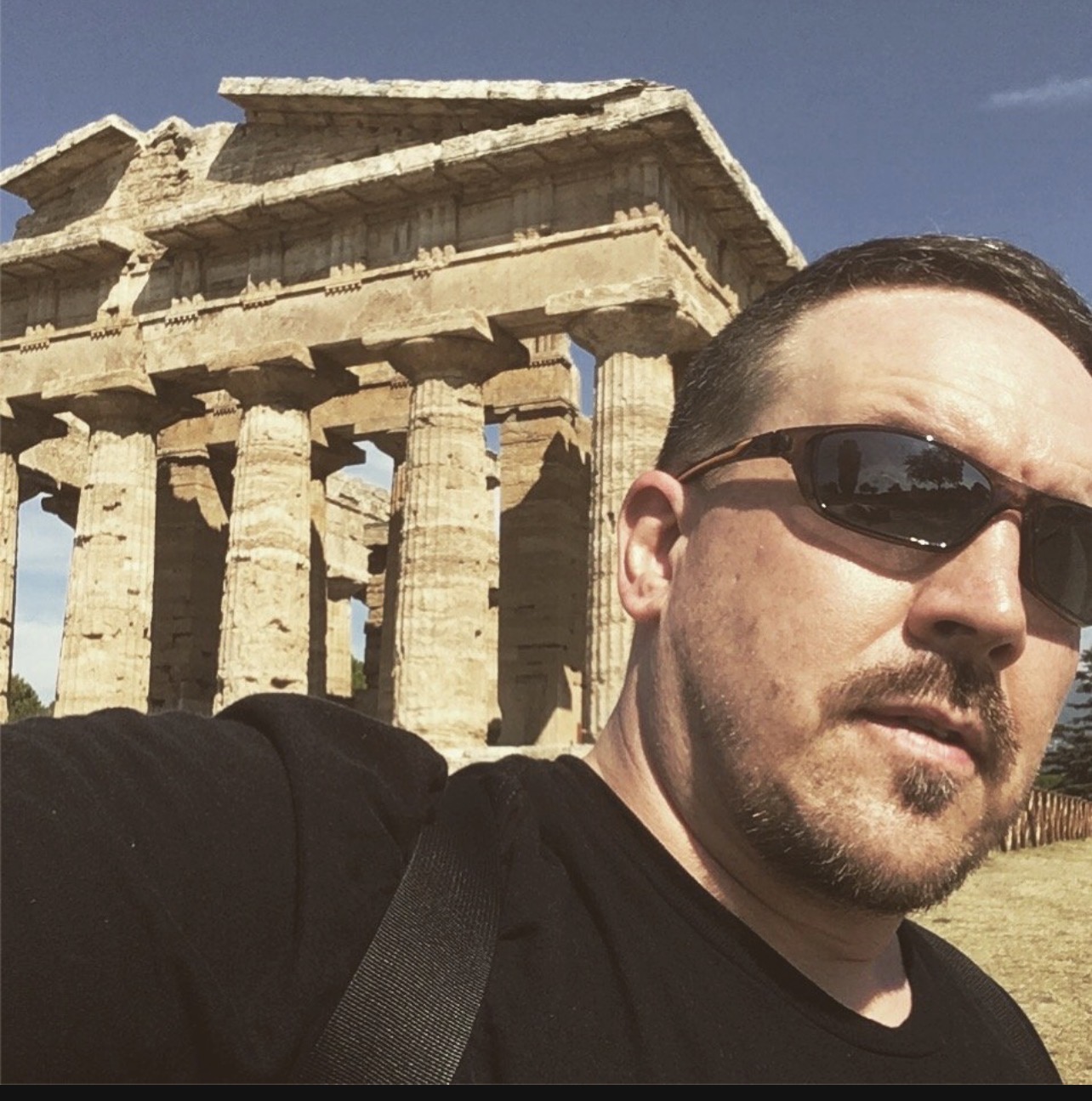
My upcoming novel, We Lowly Gods, is set to release in June. It’s a story I’ve been living with for a long, long time. As in, since the early 1990’s. 😬
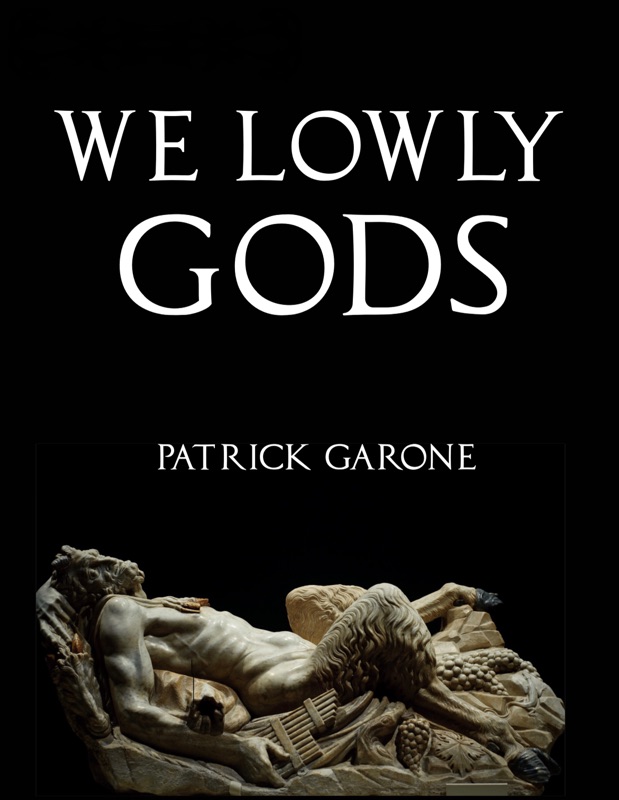
The novel is a mythic fantasy adventure set in the waning years of an Ancient Greece in which it has been decades since anyone has seen the Olympian gods. All that remains of their great pantheon are scattered communities of Chimerics—Fauns, Centaurs, Nymphs, and other wild creatures scraping by in the shadows of humanity. When a Faun is brutally murdered outside a remote village in ancient Sicily, it sets our Chimeric heroes on a quest to find out what happened to the gods and to put into place a daring plan to replace them and to keep humanity in check. Unfortunately, they are not the only ones attempting to fill the void left behind by the gods and other powerful entities plan to install their own faiths, faiths that do not include a place for misshapen Chimeric demigods.
The earliest version of this story, a vignette featuring a young Faun looking out over the orgiastic Festival of Pan and contemplating his place in the world—was written in a high school creative writing class. Although I no longer have the MacWrite file for that piece, there is a scene in the final book that is very similar to that original piece (as far as I can recall, that is.)
As I worked on the story in the ensuing years (in a variety of archaic word processors), it became a tale about a young Faun who was tasked by his elders with escorting a powerful god-creature across a mythological landscape in order to revitalize a blighted world. From a certain point-of-view that is still a major plot of We Lowly Gods. Fun fact: after the release of The Phantom Menace, I rewrote the story to feature a young Qui-Gon Jinn who crash lands on a primitive, off-limits planet and is given a similar task. Lucasbooks, if you are reading, this is still a viable story.
The story took a backseat to other pursuits, theatrical projects, my first novel, City of the Gods (no relation), going back to school to get my Bachelors and Masters, and it faded into my subconscious the way abandoned stories sometimes do.
That is until 2019. In 2019, I was fresh out of a seven-year relationship that ended in a kind of personal disaster. I was feeling deeply isolated and depressed and barely holding it together, with only a truly excellent cat to keep me company.
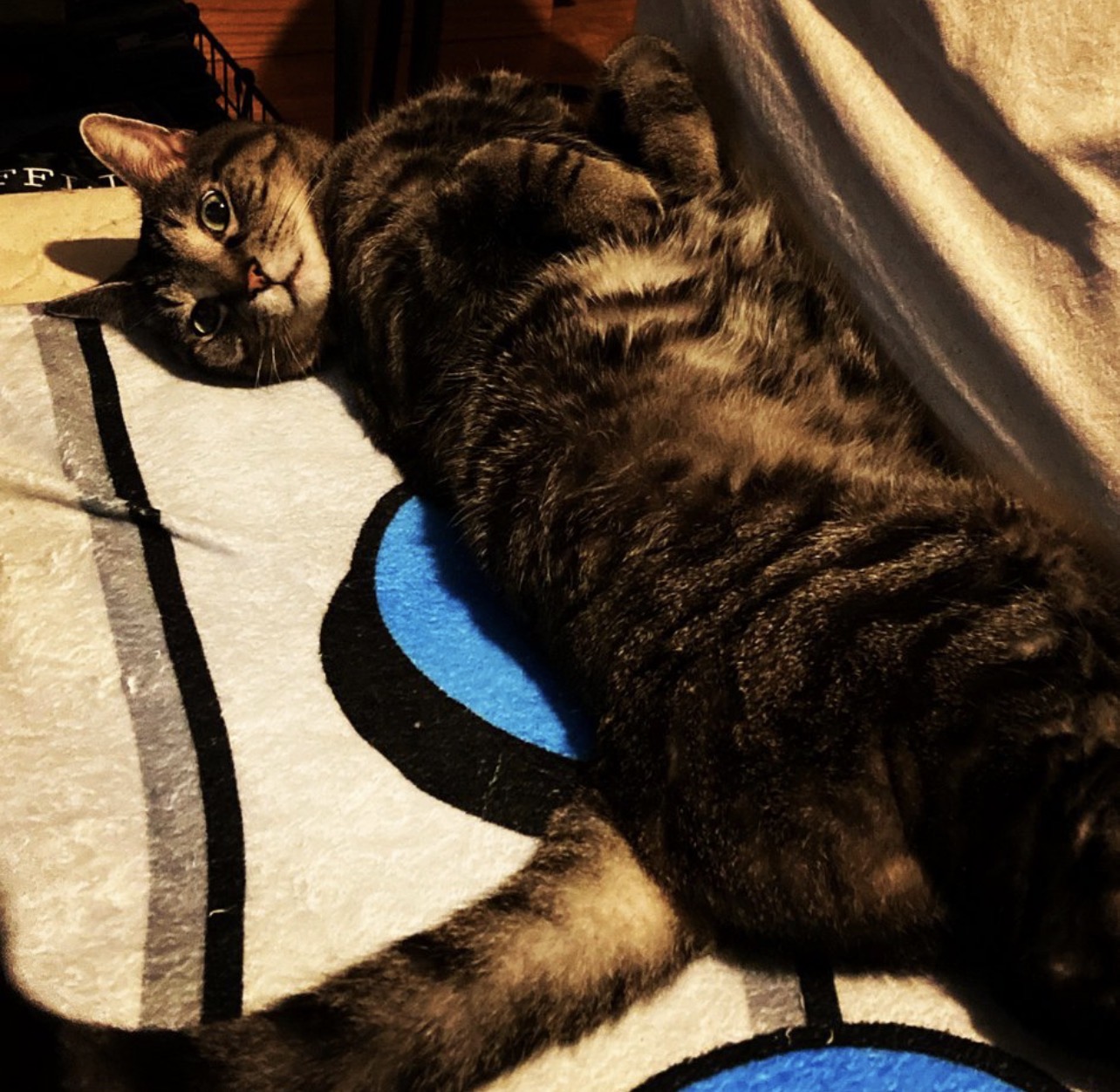
RIP, Arigato. Thank you, indeed.
As I was working my way through this dark period, I decided to complete a bucket-list trip to southern Italy which took me from Naples, to Salerno, to Palermo. I hadn’t gone on a big international trip in a decade and it was exciting to get back on the road for three weeks. And while I saw some amazing Roman ruins like Pompeii and Herculaneum I was not ready for all the stunning Greek sites that dot the region.
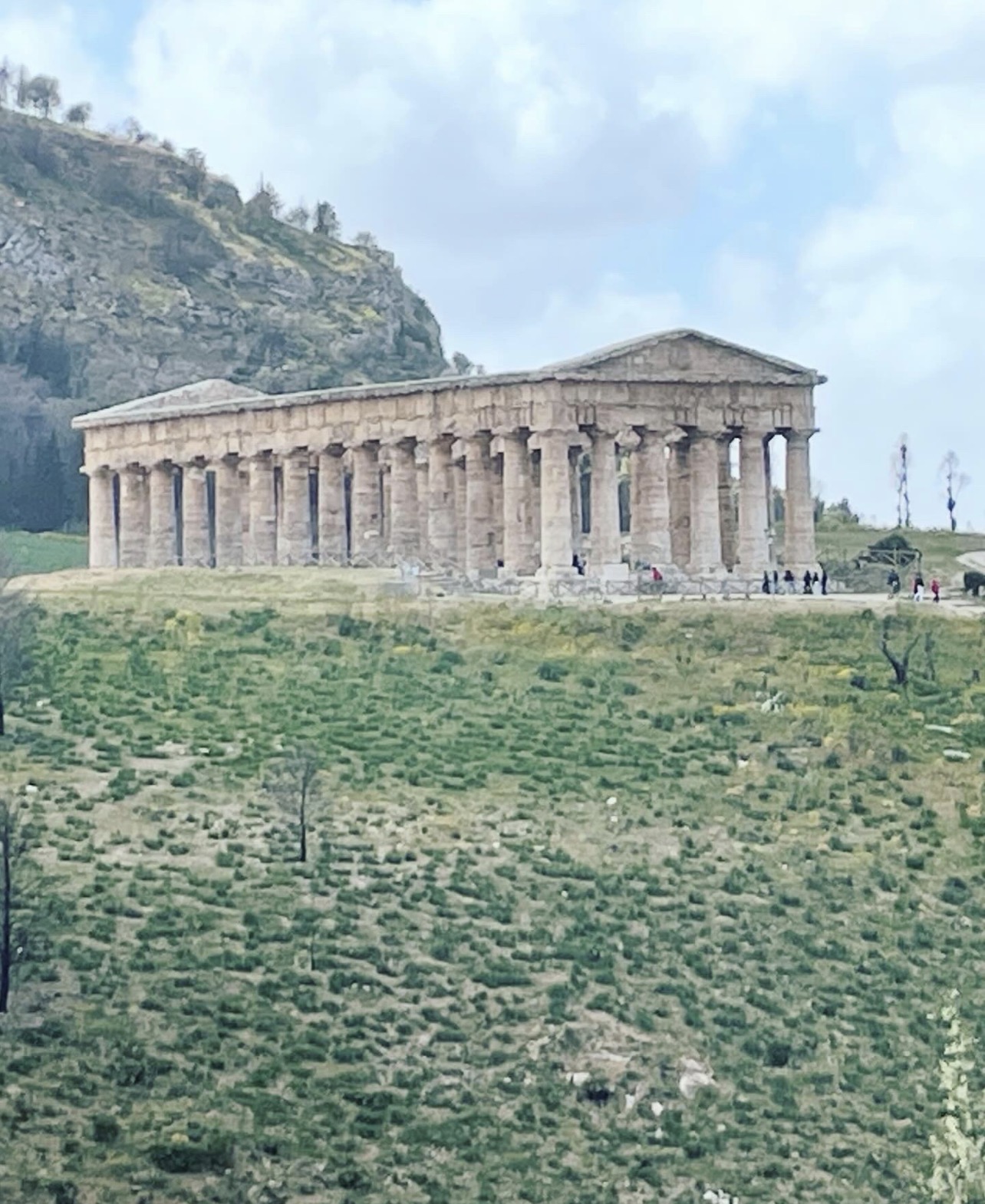
The ruins at Segesta, in Sicily.
Southern Italy and Sicily it turns out were the sites of major Greek colonies which, in some cases, surpassed even eastern cities like Athens. Greek culture is a major part of the unique cultural identity of southern Italy and some of the finest examples of Classical Greek architecture are actually found in Italy. So there I was wandering around places like Paestum, Agrigento, and Segesta and I got to thinking about my old story about the Fauns and wondered “What if it took place in Italy instead of Greece?” More than anything, that change gave me an instant cultural connection to the material, after all, my family is from southern Italy, that those Greek colonists could have been my own ancestors.
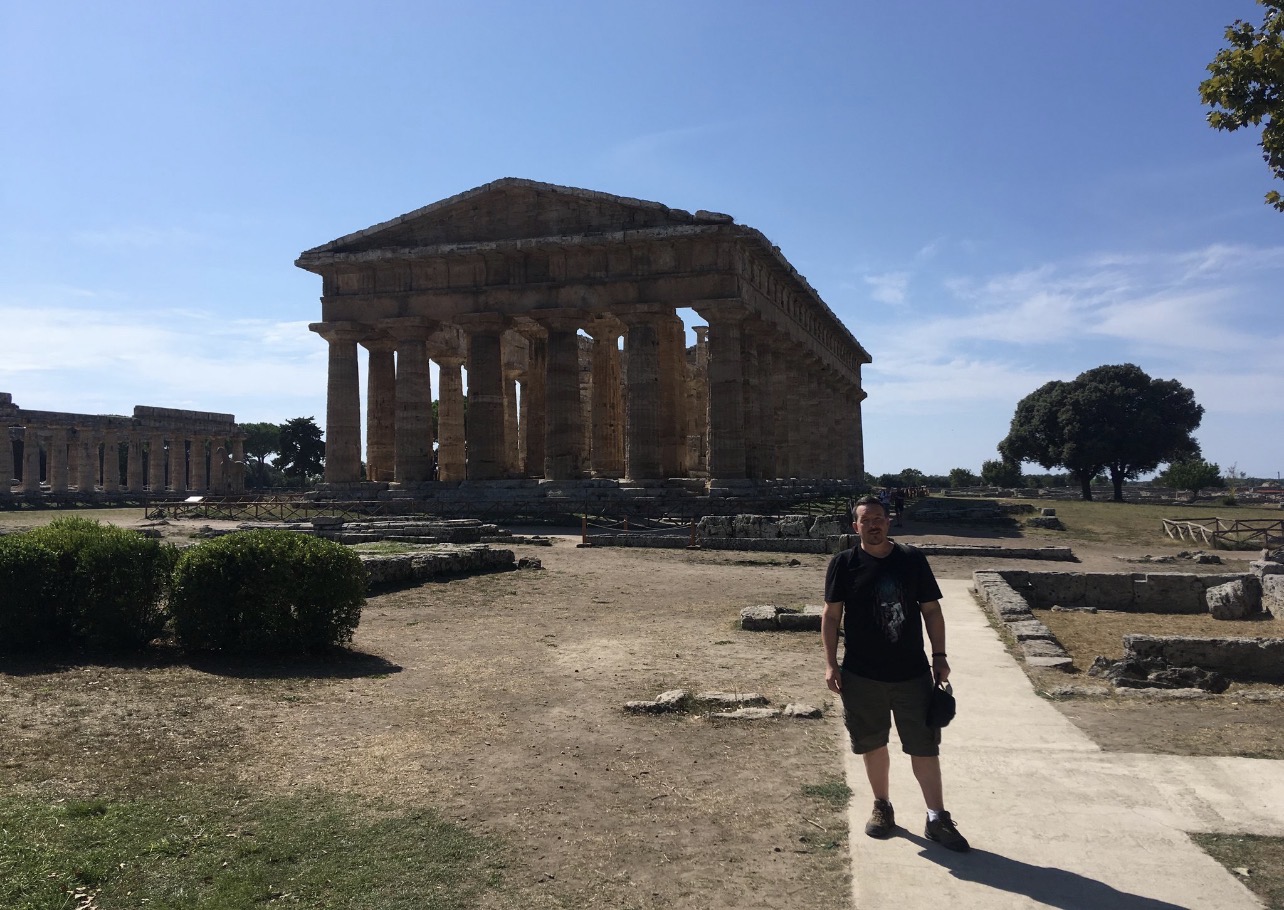
The ruins at Agrigento in Sicily.
From there it was off to the (chariot) races. I wrote a short story and over the next couple of drafts expanded it into a novel, letting the characters and story beats stretch out and breathe. I worked on it during a couple of more trips both in Spain and I finally “finished” it in 2024 on another trip to Sicily, where the beginning of the book would ultimately be set.
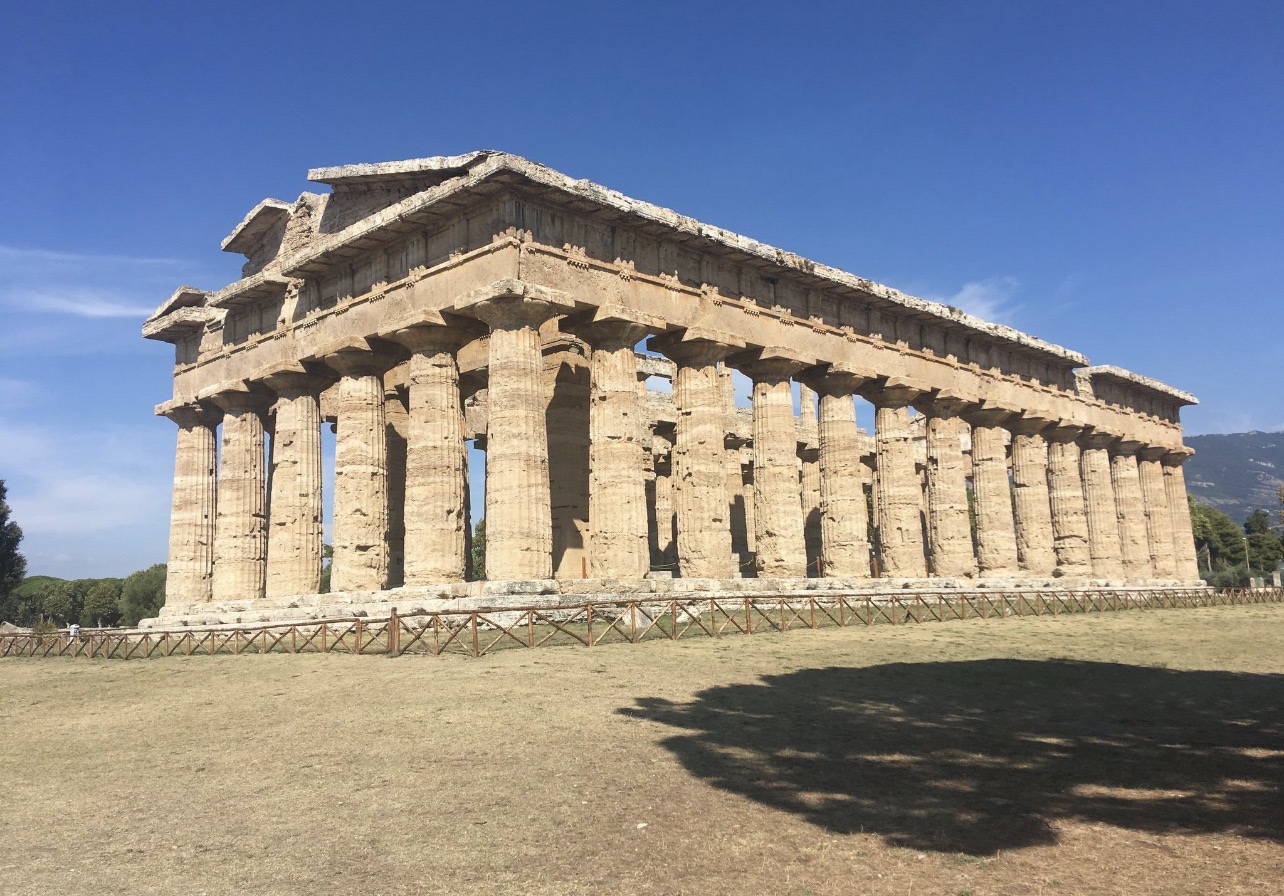
The ruins at Paestum, near Salerno.
I’ve followed the example of my favorite author, the late great Anne Rice, a writer of almost exclusively supernatural fiction featuring vampires, ghosts, mummies and other outlandish horror tropes but all infused with her deep humanity, with her own struggles, her own trauma, her own yearning for meaning. Despite the fact that my lead characters are half-goat godlings, We Lowly Gods is truly the most personal thing I’ve written to date in which I deal with some of my own ancient wounds through the prism of what I hope to be a compelling and subversive fantasy adventure filled with gods and creatures.
Look for it in June.
Subscribe to:
Posts (Atom)